

Across the country, districts continue to grapple with problems in schools that directly affect how well children learn and thrive. From rising mental health needs to persistent gaps in special education, the challenges schools face are as urgent as they are complex. Many parents worry about whether their kids are receiving the support they need, while teachers and school staff often feel overwhelmed trying to keep pace with growing demands.
Yet solutions exist. When qualified teachers deliver live, interactive instruction, students get consistent support, stronger connections, and better outcomes. These models create learning experiences that help students build confidence, improve academic performance, and prepare for long-term success. The evidence is clear: certified live teachers transform the student experience, and the time to act is now.
4 Current Problems for Students in Schools
Students today face challenges that extend far beyond textbooks. These issues are reshaping the school environment and directly impacting how children learn, affecting not just individual achievement but also the overall health of the education system. Many students, families, and districts face the following barriers every day.
1. Prevalent Teacher Shortages
The national teacher shortage has intensified, leaving thousands of classrooms without consistent instruction. According to the Teacher Shortage report, there were 49,000 vacant full-time teaching positions in the 2024-25 school year, with underqualified teachers filling 400,000 teaching positions nationwide.
Shortages hit hardest in math, science, and bilingual education. Additionally, 70% of schools reported special education vacancies, according to the National Center for Education Statistics. High-poverty schools are especially affected, according to the ERS, with 29% of teachers leaving compared to 19% in wealthier schools in the 2022-23 school year.
Key reasons driving these shortages include:
- High turnover: Many teachers leave the field within just a few years, creating constant gaps that schools struggle to fill.
- Burnout: Heavy workloads and stress are pushing more educators out of the profession sooner than expected.
- Fewer candidates: Enrollment in teacher preparation programs has declined significantly, shrinking the pipeline of new teachers.
- Alternative hiring: Districts are increasingly relying on staff without traditional training, which affects instructional quality.
When schools rely on underqualified or temporary staff, the student experience suffers. Larger class sizes, weaker academic performance, and inconsistent instruction are now common in many schools, especially those already under strain.
2. Lack of Equity and Accessibility
Educational inequity has persisted for decades, with children in underfunded districts receiving fewer opportunities than their peers in wealthier areas. Data show that instructional quality and resources are systematically unavailable in low-income schools. Furthermore, research from the Education Trust shows that students of color are disproportionately taught by less experienced or uncertified teachers
The result is a widening playing field gap. Students in disadvantaged areas consistently show:
- Lower test scores
- Reduced graduation rates
- Fewer pathways to college
Without equitable access to high-quality instruction and technology, systemic inequities remain and keep many kids from achieving their full potential.
3. Student Mental Health Issues
Mental health challenges among young people have reached critical levels. Data from the CDC shows that 40% of students felt persistently sad or hopeless, and additional reporting shows that common mental health conditions, such as behavior disorders, anxiety, and depression, continue to affect millions of children nationwide.
The causes behind these mental health struggles are multi-layered and often interconnected:
- Bullying and behavior issues
- Academic pressure
- Lack of access to resources
- Teacher stress spillover
- Social isolation
- Adverse family experiences
These issues directly hinder academic growth. Poor mental health leads to lower test scores, attendance problems, and strained peer relationships. Teachers also face the strain, with a concerning 59% reporting their jobs as “always or often stressful”. Without stronger support systems, both students and teachers risk falling behind in well-being and achievement.
4. Insufficient Funding and Investment in Education
Funding disparities remain one of the most damaging problems in schools. As of 2025, the Economic Policy Institute reports that more than 25 states still spend less on K-12 education than before 2008, leaving many districts under-resourced. In some cases, wealthier districts spend over $1,000 more per student annually than poorer ones, leading to vastly different school environments.
This chronic disinvestment negatively impacts children. Underfunded schools struggle to hire and retain experienced teachers, replace outdated textbooks, or provide adequate special education services. As a result, students in low-income communities fall behind academically while others move ahead. These consequences perpetuate cycles of poverty and inequity across the education system.

5 Ways Certified Live Teachers Transform Student Outcomes
When schools face persistent challenges, the quality of instruction often makes the difference in whether students fall behind or thrive. Certified live teachers bring consistency, expertise, and engagement that directly counter the barriers caused by teacher shortages, inequity, mental health struggles, and funding gaps.
By connecting students with qualified teachers in real time, schools can provide every child the opportunity to learn, succeed, and grow. The following areas show how certified live teachers address the biggest challenges schools face today and transform outcomes for students, teachers, and families alike.
1. Reducing the Impact of Teacher Shortages
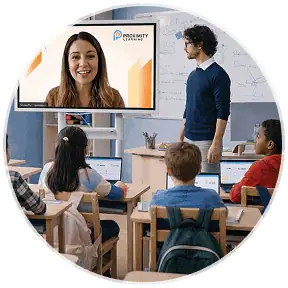
Certified live teachers give districts access to a broader pool of experienced educators, which reduces reliance on uncertified staff and improves classroom stability. They aren’t limited by geography, so they can teach students no matter where they live.
Synchronous online education directly addresses the teacher shortage. For example, Proximity Learning currently staffs over 800 teachers serving almost 100,000 K-12 students every single day. This consistency allows students to continue learning with skilled guidance, even in hard-to-staff subjects.
2. Expanding Equity and Access
Live instruction connects students in underserved areas with the same high-quality opportunities as those in affluent districts. Research demonstrates that certified live teachers can serve multiple schools across different states in a single day.
Their flexibility means that rural and urban schools struggling to recruit talent can still provide specialized courses such as STEM and special education services. This flexibility expands access and helps eliminate inequities tied to geography or district wealth.
3. Supporting Student Mental Health
Certified live teachers provide not only instruction but also consistent emotional support. Schools that integrated live teachers into their schedules reported improved engagement and reduced absenteeism, both linked to stronger student well-being. With daily check-ins, students gain a sense of connection that helps reduce feelings of isolation, an important protective factor for those experiencing anxiety or depression.
4. Maximizing Limited Resources
Using certified live teachers allows schools to stretch tight budgets without sacrificing quality. Districts that adopted live virtual staffing with Proximity Learning maintained full offerings in special education, world languages, and electives while reducing costs tied to recruitment and turnover.
5. Improving Academic Performance
Certified live teachers consistently drive stronger learning outcomes. For example, a multi-term study conducted by Chicago State University of over 40,000 students found that those in Proximity Learning’s synchronous, teacher-led online classes experienced a 7.9% grade increase, with up to 56% increases in core subjects.
By combining subject expertise with interactive teaching, certified live teachers foster measurable improvements in academic growth and long-term success for students across diverse settings.
Transform Student Challenges into Success Stories with Proximity Learning
The most pressing challenges in today’s schools don’t have to define student outcomes. With over 15 years of experience, Proximity Learning has proven that certified live teachers can change the trajectory for students everywhere. By delivering instruction across 3,000+ classrooms and partnering with more than 400 districts, Proximity Learning ensures access to high-quality teaching that strengthens academic performance and fosters student confidence.
Districts that choose Proximity Learning don’t just fill vacancies; they create thriving learning environments where every child has the chance to succeed. These numbers represent children, families, and communities experiencing the impact of consistent, expert instruction.
Are you ready to combat the challenges facing your district? Contact Proximity Learning today to learn how we can connect your schools with certified live teachers and create the outcomes your students deserve.