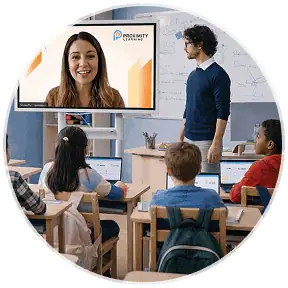

Some of the biggest misconceptions about virtual teachers come from confusing today’s synchronous instruction with pandemic-era remote learning. For many district leaders, the idea still brings back memories of students staring at screens, teachers trying to manage classes from home, technology issues interrupting lessons, and everyone simply doing their best to keep learning moving. That experience left a lasting impression. But today’s synchronous instruction model is not emergency remote learning. Proximity Learning has been delivering live, synchronous instruction since 2009, long before the pandemic made remote instruction a necessity. Today, certified teachers are livestreamed into school classrooms to teach in real time, following the school’s bell schedule and working alongside an in-classroom facilitator. So, what is fact and what is leftover skepticism? Let’s take a closer look at some of the most common virtual teacher myths and what districts should actually evaluate when considering a provider.
Key Takeaways
- This is not pandemic-era emergency learning. Synchronous instruction puts a live teacher in front of students in real time, following the school’s schedule.
- Teachers are certified. Proximity Learning matches teachers to state and subject requirements and trains them specifically for live synchronous instruction.
- Students are not left on their own. An in-classroom facilitator supports students and the virtual teacher throughout the school day.
- The model can be measured. Proximity Learning uses assessment data, including LinkIt pre- and post-assessments, to help teachers and districts monitor student progress.
Why These Myths Persist
Much of the skepticism around virtual teaching can be traced to how instruction was experienced during the pandemic. When schools moved online during the pandemic, districts had to make enormous changes almost overnight. Teachers adapted lessons, students adjusted to new routines, and technology became part of nearly every class. For many students, “online learning” became synonymous with watching a screen and trying to stay focused from a distance. While pandemic-era learning may have been many educators’ and students’ first exposure to virtual learning, it was not designed to be the long-term model for synchronous instruction. Today, districts can choose a different approach. Instead of asking an existing classroom teacher to suddenly recreate an entire class online, they can work with educators who are specifically trained to deliver live instruction in a virtual environment. In the synchronous instruction model, a teacher and their students are online together at the same time. The teacher can ask a question, hear a response, notice confusion, change the pace of the lesson, and interact with students throughout the class. An in-classroom facilitator provides another layer of support on site.
Myth vs. Fact Breakdown: What Virtual Teaching Really Looks Like
Myth: It’s Just Pre-Recorded Video
Fact: Instruction is live and interactive. Proximity Learning connects students with a certified teacher in real time through 100% synchronous instruction. Teachers explain concepts, ask questions, respond to students, and make adjustments based on what’s happening in the classroom. This distinction makes a difference. Pre-recorded video lectures are asynchronous. Synchronous instruction puts a real teacher and real students together at the same time, even when the teacher is located somewhere else. Proximity Learning has delivered this model for more than 15 years, including long before pandemic-era remote learning. The goal has always been human-to-human instruction that keeps students connected to a qualified teacher. If a teacher is actively teaching, responding, and adapting in real time, students are participating in instruction, not simply watching a screen.
Myth: Virtual Teachers Aren’t Really Certified
Fact: Certification is essential, regardless of where or in which context instruction takes place. Proximity Learning provides certified teachers aligned with the subject and state requirements for the classrooms they serve. Teachers are also trained to teach in a virtual format. That distinction is important because knowing a subject and knowing how to deliver engaging synchronous instruction are not necessarily the same skill. District leaders should be able to ask exactly which certification a teacher holds, which state requirements apply, and how the provider verifies those credentials. While the location of the teacher may differ, the expectation for qualified instruction does not. They are held to the same standards as an in-person teacher.
Myth: Classrooms Are Unsupervised
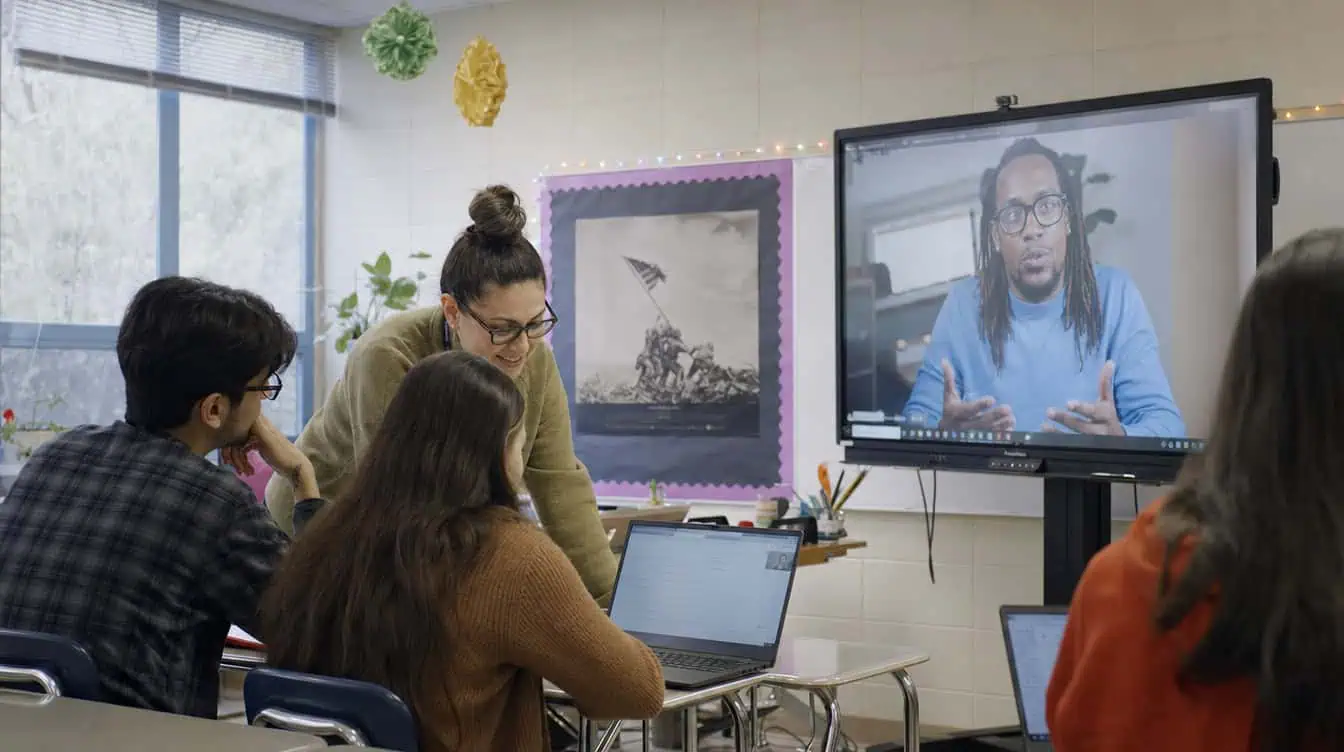
Fact: A synchronous virtual classroom includes both the remote teacher and an in-class, on-site facilitator who provides support in the classroom where students are learning. The teacher remains responsible for teaching the lesson, while the facilitator can help with classroom logistics, student needs, and the day-to-day environment. That creates an established support structure, rather than asking students to manage an online lesson independently. For districts evaluating virtual instruction, it’s important to ask about a provider’s ESS-backed facilitator network. A quality program should clearly explain who is responsible for instruction, who supports students in the room, and how those roles work together.
More Virtual Teacher Myths Worth Retiring
Myth: Students Won’t Stay Engaged
Fact: The number one factor in student engagement is how a teacher conducts their lesson. Synchronous instruction gives certified teachers the opportunity to ask questions, respond to students in real time, adjust lessons, and use data to address individual learning needs. Proximity Learning’s LinkIt partnership provides measurable evidence. During the 2024–2025 school year, students participating in the program showed post-test gains across all eight tested subjects, including 23% in Chemistry, 22% in Algebra II, and 22% in Biology. When students have a teacher who is present, responsive, and actively teaching, a screen doesn’t have to be a barrier to engagement. It can be the connection to the teacher they need.
Myth: It Only Works for Core Subjects
Fact: Synchronous instruction can support a broad range of subjects and student needs, whether that’s math, English, or specialized courses. Proximity Learning provides certified teachers across core and specialty subjects, giving districts access to qualified educators without limiting their search to candidates who live nearby. That flexibility can be especially valuable when a district has a vacancy in a hard-to-staff subject. Proximity Learning can also support specialized needs through services such as SPED case management and state-licensed occupational therapists, speech-language pathologists, and school psychologists. Ultimately, a teacher’s physical location does not determine whether they can deliver high-quality instruction in the subject students need.
Myth: Districts Get Locked Into Rigid Contracts
Fact: Proximity Learning doesn’t require an annual contract. Districts retain full autonomy and flexibility to incorporate synchronous instruction into the curriculum based on their evolving needs. District staffing needs can change quickly, so access to a flexible staffing model is essential. Whether a district needs support while recruiting for a permanent position, responding to an unexpected vacancy, or addressing a hard-to-fill subject, Proximity Learning can help ensure instruction is uninterrupted. Proximity Learning’s model is designed to complement a district’s hiring strategy, not replace it. Districts can access qualified teachers when they need additional support while determining what comes next for their classrooms. Instead of mandating a one-size-fits-all commitment, Proximity Learning provides staffing solutions that adapt to each individual district.
What District Should Actually Evaluate
Ask About Certification and State Licensing
Start with the instructors. Ask how the provider verifies teacher credentials and ensures educators meet the certification requirements for the state and subject they will teach. Districts should also understand how those credentials are maintained and documented throughout the partnership. For specialized services, licensing is equally important. Districts should ask whether providers such as occupational therapists, speech-language pathologists, and school psychologists meet applicable state requirements. Proximity Learning connects districts to certified teachers and licensed specialists aligned with state requirements. Teachers are also trained specifically for synchronous instruction, ensuring they are prepared not only to know the material, but to teach it effectively in a livestreamed environment. Evaluation question: Can the provider clearly document that every educator meets the requirements for my district?
Ask How Engagement is Built Into the Curriculum
Don’t just ask whether instruction is live. Ask what makes it interactive. A synchronous model should give students meaningful opportunities to participate, ask questions, receive feedback, and interact with their teacher throughout the lesson. Districts should look for providers that can explain how teachers adapt instruction in real time and how the curriculum supports active participation rather than passive screen time. It’s also important to understand whether the provider can work with the district’s existing curriculum or develop custom courses when needed. Proximity Learning’s teachers deliver live, synchronous instruction designed around interaction and student participation. Districts can use their own curriculum or work with Proximity Learning to create customized courses. Evaluation question: What opportunities will students have to participate, interact, and apply what they are learning during each lesson?
Ask About Facilitator Support Model
A remote teacher shouldn’t mean an unsupported classroom. Ask who is physically present with students, what that person’s responsibilities are, and how the teacher and facilitator communicate throughout instruction. A strong support model creates clear roles. The certified teacher leads instruction, while the in-class facilitator provides classroom support and helps create a smooth learning environment. This can be especially important when districts are introducing synchronous instruction to schools for the first time. Proximity Learning’s ESS-backed facilitator network provides in-classroom support while certified teachers deliver instruction remotely. This human-to-human model gives districts a structure designed around both the teacher and the students. Evaluation question: Who supports students in the classroom, and how do they work with the remote teacher?
Conclusion
Some of the most widespread myths about virtual teachers come from experiences that don’t reflect the quality of synchronous instruction available today. A livestreamed lesson isn’t the same as a pre-recorded video. A teacher working remotely doesn’t mean students are learning without support. A flexible staffing solution does not have to mean sacrificing quality, engagement, or accountability. For district leaders, the best approach is to look beyond the screen and evaluate what happens behind it. Are teachers certified? Are they trained for synchronous instruction? How is student engagement supported? Who is present in the classroom alongside the teacher? Proximity Learning is built around those questions, connecting districts with certified teachers and a support model designed to keep instruction moving when staffing gaps arise. Ready to see what synchronous instruction could look like for your district?
FAQs
- Is virtual learning the same as the emergency remote learning from the pandemic?
No. Emergency remote learning was a rapid response to an unprecedented disruption. Synchronous instruction is a purpose-built model where certified teachers are trained to deliver livestreamed lessons and engage with students in real time. The goal is consistent, interactive instruction, not simply replicating an in-person lesson online.
- How can a district verify a virtual teacher’s certification?
Districts should ask the provider for documentation showing that each teacher meets the applicable state and subject certification requirements. They should also ask how credentials are verified and maintained. Proximity Learning connects districts with certified teachers who meet state requirements for the instruction they provide.
- Do students in virtual classrooms actually score better or worse?
Student outcomes depend on many factors, including instruction, curriculum, engagement, and student needs. Proximity Learning’s 2024–2025 LinkIt data showed post-test gains across all eight tested subjects, including gains of 23% in Chemistry and 22% in both Algebra II and Biology.
- Doesn’t virtual instruction mean less human connection?
Not when instruction is truly synchronous. Students interact with a certified teacher in real time, asking questions, receiving feedback, and participating throughout the lesson. With an in-class facilitator providing additional assistance, students have access to a support system rather than learning independently from pre-recorded content.
- What happens if the virtual teacher or technology fails mid-lesson?
Districts should ask providers about their contingency procedures before implementation. Proximity Learning’s support model includes classroom facilitators who can help manage the in-class environment, along with a broader support team that helps address any technical or instructional issues. The goal is to ensure every classroom stays connected to a qualified teacher and meaningful instruction, even when the unexpected happens.