
A few weeks into the school year, the classroom sits empty, still waiting for a teacher. You keep hitting refresh on the job board, watching the applicant list shrink, while your students feel the absence with every passing day.
If this scenario rings true, you are not alone, and there’s hope. Discover how districts are now filling classrooms in days, not months, by connecting open positions with certified teachers who livestream in from anywhere in the country.
Follow the step-by-step process, learn what you need to move fast, and see why flexibility matters as much as speed. Whether you are facing one vacancy or several, the mission is clear: get a real teacher in front of your students, fast.
Key Takeaways
- Proximity Learning pairs districts with a certified teacher within days, not months, and every class is live, synchronous instruction.
- Speed comes from a national network of certified virtual teachers, so a district is not limited to who lives nearby.
- Districts move fastest when they arrive with vacancy details, one onboarding contact, and a plan for the in-classroom facilitator.
- No annual contract is required, so districts can start with the need in front of them and adjust as it changes, whether that means one class or several.
Why Speed-to-Fill Matters More Than Ever
Teacher vacancies are still a real problem well after the first bell. According to the National Center for Education Statistics (NCES), 35 percent of U.S. public schools reported at least one teaching vacancy as of October 2024, and 20 percent of all public schools were operating with more than one. The reasons will sound familiar. In the same federal data, 64 percent of schools cited a lack of qualified candidates and 62 percent said too few candidates were applying.
Open classrooms affect everyone. According to NCES, 29 percent of schools have larger class sizes because of vacancies, and 22 percent share teachers and staff with other schools. Each extra week spent trying to fill these roles means students lose valuable instructional time. Special education positions are especially hard to fill, with 74 percent of both elementary and middle schools struggling to find fully certified teachers. When a district can hire teachers quickly, it protects instructional time, keeps schedules on track, and gives students the consistency they need while the search for permanent staff continues.
What “Within Days” Actually Looks Like
Confirming the Vacancy and Certification Requirements
The process starts with a simple conversation. You share the grade level, course, schedule, and start date for the open position, along with the certification your state requires for the role. Proximity Learning uses those details to find a teacher whose subject specialty fits. It is a short intake, not a months-long recruitment cycle, and the details that matter are the ones your bell schedule and course catalog already tell you.
If you can describe the vacancy in a few sentences, you can start the process today. Proximity Learning covers every core subject and a range of world languages, from Spanish and French to American Sign Language, so don’t hold back on what you need.
Matching a State-Certified Virtual Teacher
Next, Proximity Learning pairs your classroom with a state-certified teacher, often within days.
Because the network is national, the search is not limited to candidates who live near your district. Palisades Park School District’s ASL case study shows how it can go: its teacher was matched and ready in just days, and the first course launched two weeks after the partnership began. The instruction is synchronous, meaning live and interactive, not pre-recorded video. Teachers are evaluated against National Virtual Teacher Association (NVTA) standards, and Proximity Learning has delivered synchronous instruction for over 16 years, well before the pandemic.
Coordinating the In-Classroom Facilitator
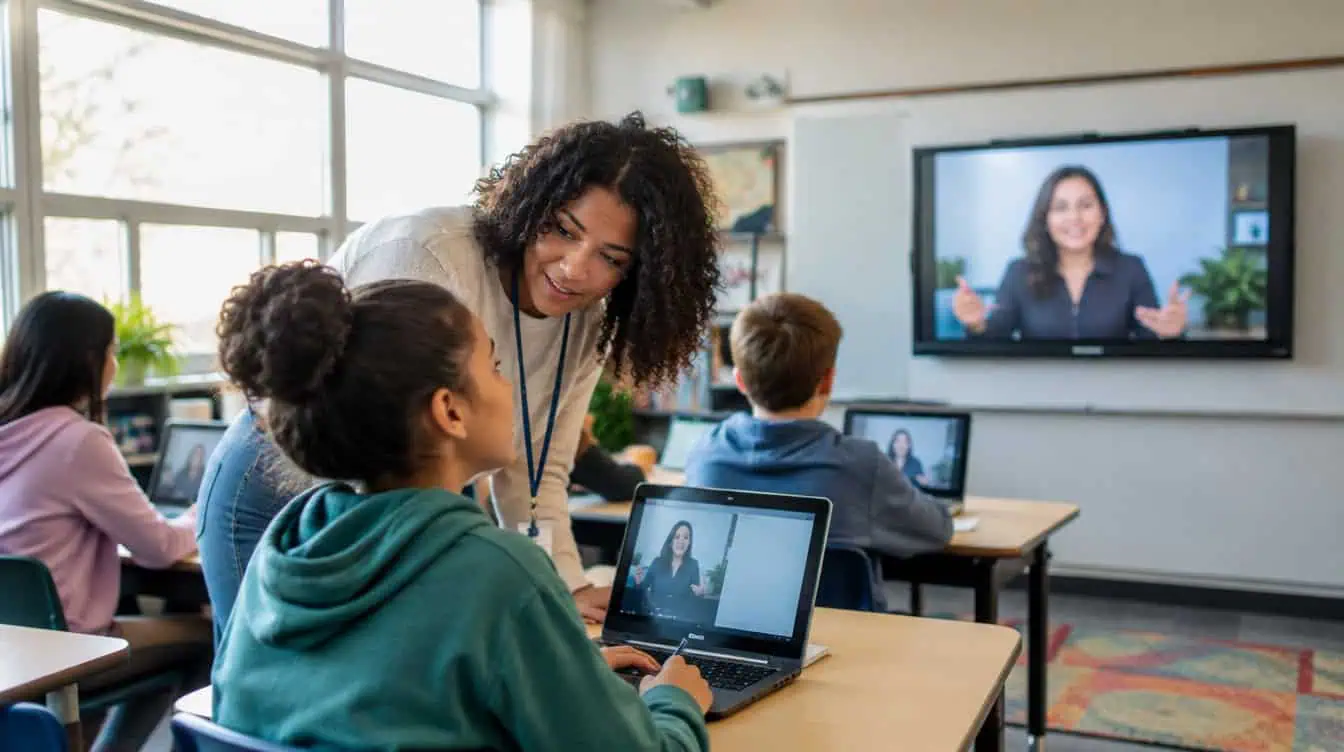
Each livestreamed class includes a second adult in the room. The in-classroom facilitator manages the classroom, encourages student participation, and helps the day run smoothly. The certified teacher handles teaching, assessment, and grading. Before classes begin, Proximity Learning trains facilitators and sets up webcams and speakers so students can see and hear their teacher clearly. The teacher joins live according to your school’s bell schedule, so the class feels like any other period during the day. Students can ask questions, get feedback, and stay engaged in real time, which sets live instruction apart from recorded lessons.
What Districts Should Have Ready to Hire Teachers Fast
Confirmed Vacancy Details and Timeline
Before reaching out, gather the basics: grade level, course, schedule, and the start date. If you know the required state certification, include that as well. When districts provide clear details, there is less back-and-forth, so everyone can focus on finding the right teacher. Proximity Learning also asks schools to share key teacher resources during planning, so it helps to know where you keep your curriculum materials. If you prefer not to use your own materials, teachers can work with your team to create a custom course that matches your state standards.
A Point of Contact for Onboarding
Once the contract is signed, Proximity Learning meets with district leaders to create a shared success plan. This meeting covers key outcomes, potential challenges, required platforms and resources, and support for students with IEP or 504 plans.
Having a single point of contact makes the meeting more productive and helps decisions move forward. That person can also be the main contact at the school, so principals and staff know who to contact with questions. You can learn more about the onboarding process before you start. After launch, Proximity Learning checks in to gather feedback from students, teachers, and facilitators, and reviews the success plan with the district every three months.
A Plan for the Classroom Facilitator
Decide who will be in the classroom. During planning, districts choose a primary facilitator for each class, and Proximity Learning trains them before classes start. Facilitators help the livestreamed teacher by managing the room and keeping students engaged, but they do not teach.
Naming this person early allows training to begin on time and ensures the class is ready from day one. It also gives students a familiar adult in the room while their certified teacher leads the lesson live. Facilitators and teachers work together on accommodations, so students who need support get it during livestreamed lessons.
Why Flexibility Matters as Much as Speed
No Annual Contract Required
Proximity Learning doesn’t require annual contracts, so districts can focus on immediate needs. For superintendents managing tight budgets, this means staffing can adjust as the year unfolds, not before. Palisades Park is a good example. Without a long-term contract, the district started quickly and added a second ASL course after the first one was successful. This flexibility helps districts address their most urgent needs first and make decisions based on results. For leaders juggling many priorities, this adaptability is reassuring, not risky.
Mid-Year and Short-Term Placement Options
Vacancies can happen at any time, whether it’s August or January. Proximity Learning is ready to step in and help until you find permanent teachers. If your need is only temporary, let us know from the start so we can plan together. Districts can also choose how often they get updates from Proximity Learning, whether that’s weekly, every two weeks, or monthly.
Scaling Up or Down as Needs Change
Needs can change over time. A district might begin with one class and add more later, or hire a permanent teacher and reduce support. Because our terms are flexible, the partnership adjusts to your needs. Palisades Park started with ASL 1 and quickly added ASL 2 after seeing success. Chicago Public Schools and Memphis-Shelby County Schools are also renewing their partnerships, showing how districts continue to build on this model. For more examples, check out Proximity Learning’s case studies.
A Certified Teacher for Every Empty Classroom
Districts can connect students with a certified, livestreamed teacher in a few days, without an annual contract. Fast action keeps instruction going now, and flexibility helps your budget and options later. If you are ready to hire teachers and want to discuss what that could look like for your district, Proximity Learning can help fill your vacancies with certified, livestreamed instruction. Share your vacancy details, and we will handle the rest. No matter when your vacancy opens, the next step is a conversation. Your students need a teacher, and the sooner we talk, the sooner we can cover your classroom.
FAQs
How quickly can a district actually fill a teacher vacancy?
Proximity Learning pairs districts with certified teachers within days. In its Palisades Park case study, the teacher was matched in days and the district’s first course launched two weeks after the partnership began. Your timeline also depends on your schedule, start date, and facilitator readiness.
What does a district need to do to start the fast-placement process?
Share the grade level, course, schedule, and start date for the vacancy. Then choose one onboarding contact and name the in-classroom facilitator who will support students during each livestreamed class. Proximity Learning handles the teacher match from there, and its team will walk you through onboarding steps and a joint success plan.
How many teacher vacancies go unfilled for a month or longer nationally?
NCES does not publish a one-month figure, but its data shows the pressure. As of October 2024, after the school year had begun, 35 percent of public schools had at least one teaching vacancy, and 3 percent of all public school teaching positions were vacant nationwide. Speed matters for every one of those classrooms.
Isn’t fast placement a sign of lower-quality candidates?
No. Speed comes from a national network, not lower standards. Proximity Learning pairs classrooms with state-certified teachers, evaluates them against National Virtual Teacher Association standards, and its teachers deliver only live, synchronous instruction, not pre-recorded video.
What if we only need a placement for a few months?
Flexibility is part of the model. Proximity Learning does not require annual contracts, so districts can start with the need in front of them and adjust as it changes.