
When the COVID-19 pandemic hit the United States, we had no choice but to adapt. The entirety of our lifestyles was forced to go online, including education. What had been a majorly face-to-face matter for K-12 students suddenly went virtual. Virtual learning quickly became a popular option among schools and continues to be so today, as it offers flexibility for students and teacher vacancy solutions.
The rise of virtual classrooms also brought with it asynchronous instruction, where students learn using pre-recorded materials that do not require real-time teaching and participation. While schools realized that leaving students to teach themselves wasn’t yielding the results they were looking for, Proximity Learning was delivering a synchronous instruction model dedicated to increasing student success. But this was nothing new to Proximity. With over 15 years of experience, we are actively working to close learning gaps and fight the teacher shortage by virtually connecting students to live certified teachers.
Is asynchronous learning effective?
While asynchronous learning may be helpful for certain students, it does not outperform the effectiveness of synchronous learning. A 2022 study showed that students’ performance drops in an asynchronous online course compared to an equivalent in-person class (Jensen et al). In-person students at a public institution significantly scored higher than asynchronous students on:
- Unit Exams by a median of 6.8 points
- Final Exams by a median of 16.8 points
- Content Attainment Quizzes showed no statistical difference
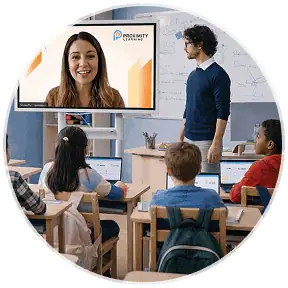
Asynchronous classes often leave students to teach themselves the content. While this method is only effective for the most disciplined of students, at Proximity Learning, we make sure to guarantee that every last student is learning properly. Our live synchronous model puts a teacher on every student’s screen, ready to give feedback and answer any questions. We know that students thrive from connections with real teachers, and the numbers prove it as well.
What keeps students engaged in the classroom?
Students are engaged in the classroom when they’re completing interactive assignments, building connections with their peers, and receiving attention from their teacher. A 2023 research article by Jiarui Xie and Ana-Paula Correia analyzed 25 studies regarding the effects of instructor participation in asynchronous online learning and found that teacher participation “enabled students to achieve higher grades.” Although asynchronous, students demonstrated real learning when real instructors took an active role in teaching.
When students have a teacher in front of them, they are able to immediately address any questions or concerns they may have about a certain topic.
Our synchronous virtual learning model allows students who struggle with speaking out loud to privately message their teacher with any doubts they may have and show that they are engaging with the lesson. Proximity Learning prevents districts from putting unqualified teachers or no teachers at all in front of students; we work together to uphold the integrity of education.
Why are teacher-student relationships important?
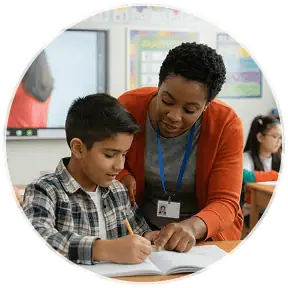
Teacher-student relationships are important because they provide students with an unconditional support system that is rooting for them all throughout their education. That is a connection that asynchronous instruction cannot provide. We know the teacher shortage can feel inescapable, and you want to make sure that your students never stop learning. But the cost of filling teacher vacancies with asynchronous instruction puts students at risk.
Teachers provide irreplaceable connections that can support students throughout their whole educational journey. We can all think of that one teacher who made an impact on us while we were also students. You cannot find these powerful influences through asynchronous learning, but you can through live virtual learning. You can do it with Proximity Learning.
Proximity Learning avoids the dangers of asynchronous learning
As we continue to live in a post-pandemic world, we carry on the remnants of virtual learning and remote work. While models such as asynchronous learning may provide convenience, they cannot replace the human connection that students need to learn. At Proximity Learning, we are committed to delivering the best teachers and education that students can receive. That is why we bridge the gap between flexibility and effectiveness by working with certified teachers who are trained to teach students in a virtual classroom.
When schools choose synchronous learning models, they are putting their students first. Teacher vacancies can be challenging, but Proximity Learning is here to help you solve that problem. Join the movement against asynchronous learning and ineffective curriculum.