

Proximity Learning prioritizes student learning, which is why we are anti-async. Asynchronous learning leaves students to click through lessons with little support. Our synchronous instruction model gives students access to a certified teacher via livestream, which improves test scores and academic achievement.
Here’s your challenge and why it’s hurting you
The teacher shortage crisis and funding uncertainty affect nearly every school district in the country. Fewer education graduates seek teaching licenses and many leave the field after 2 years. Retention has become a major issue partnered with a dwindling talent pool.
To add to the strain, once reliable federal dollars are now fluctuating every day, leaving administrators challenged to complete their budget planning. Funding cuts eventually lead to layoffs of essential positions, and the teacher shortage makes it difficult to fill empty roles.
Facing this cycle, district leaders are forced to hire underqualified candidates, extend teacher responsibilities, and expand class sizes. Administrators are trying their best, but these issues ultimately leave students without the resources they need.
What is asynchronous learning?
Asynchronous instruction involves pre-prescribed lessons that students click through as they read, watch videos, or answer questions. However, the lessons aren’t individualized to each students needs and support is often not available. They must wait for office hours with a teacher or ask a chatbot, which can lead to communication issues. Students are largely left to fend for themselves in asynchronous courses.
Sometimes it’s all administrators can afford to give students, but we believe there is a better way.
What is synchronous learning?
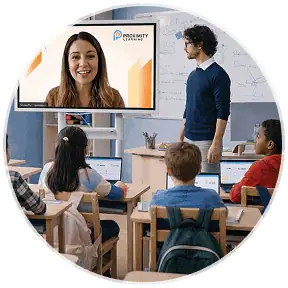
Synchronous instruction from a livestream certified teacher offers real-time teaching to students who may not otherwise have access to a qualified educator. Our Proximity Learning teacher is projected on the screen at the front of the classroom and on each student’s individual device. A two-way speaker allows the teacher and students to hear each other and interact. A facilitator or paraprofessional in the classroom takes attendance, monitors behavior, and assists with small group work.
The Proximity Learning teacher and facilitator work as a team to provide the best instruction possible for your students.
Synchronous Vs. Asynchronous Learning
The differences between synchronous and asynchronous learning are stark, both in the instruction itself and it the results. Asynchronous courses leave students to work independently with little interaction, individualization, or support. The student experience is greatly improved when learners interact synchronously with their teacher every day. Teachers differentiate lessons and answer questions throughout instruction, so students truly understand the concepts. As a result, students retain more information and score higher on standardized tests.
We’re Anti-Async
Top 5 Reasons Synchronous Learning Works and Async Doesn’t
We’re anti-async because we believe every student has infinite potential with the right tools, and you should too. Access to a certified teacher is a non-negotiable for student success, so we work hard as your partner to increase educational equity across the country.
Join the movement against asynchronous learning and ineffective curriculum.