
Problems in Education: Research-Based Synchronous Solutions for Today's Districts


Across the country, problems in education are affecting how quickly students recover from years of disruption and how well they’re prepared for the future. These issues impact every part of the education system, and no district is immune. Decision-makers are now balancing immediate staffing needs with the long-term goal of providing high-quality education in a way that’s sustainable, equitable, and measurable.
The good news is that solutions exist, and they don’t require lowering standards or relying solely on short-term fixes. By using research-driven methods like synchronous learning, school districts can address critical gaps in student performance, keep students engaged, and strengthen relationship skills across grade levels.
Live, interactive instruction connects qualified teachers with students in real time, giving districts the tools to improve test scores, increase graduation rates, and maintain safe learning environments. It all starts with understanding how to make these solutions work in your schools, and why the right approach can transform outcomes for years to come.
4 Common Problems in Education in America
The education issues impacting school districts across the country are systemic, affecting students in both rural and urban communities. While each district’s challenges may look different, the following underlying patterns are often the same. Understanding these root causes is essential for finding lasting solutions.
1. The Nationwide Teacher Shortage
Nationwide teacher shortages have been growing for more than a decade, worsened by factors such as:
- Mental health concerns like burnout
- Low pay
- Increased workloads
The Teacher Shortage Report reveals that there are at least 49,000 vacant teacher positions in the 2024-25 school year. Education statistics from the American Federation also show that 25 states spend less on K-12 than they did before 2008, which has pushed school districts to adopt short-term fixes like emergency or provisional teaching certificates rather than sustainable staffing models.
These gaps disproportionately affect students in low-income and rural areas, where attracting credentialed educators is even harder. The effect on student performance is significant. Larger class sizes reduce one-on-one attention, and students – especially younger children – lose the consistent support they need to build relationship skills and academic confidence.
In high-poverty areas, most students face reduced access to advanced coursework and specialized programs, contributing to lower graduation rates. Without systemic changes and long-term staffing solutions, this shortage will continue to widen equity gaps across the education system.
2. Lack of Qualified Teachers
Many school districts have increasingly turned to non-certified or underqualified teachers to keep classrooms open. The Learning Policy Institute reports that in 2017, there were about 108,757 teachers nationally not fully certified or qualified for their teaching assignments. And according to the Teacher Shortage Report mentioned earlier, that number increased to 400,000 positions for the 2024-25 school year.
These individuals often lack training in child development, classroom management, and differentiated instruction – skills essential for special education, core subjects, and CTE classes. The result is that students are taught by individuals learning on the job and therefore receive lower-quality instruction.
The long-term effects are troubling:
- Lower test scores
- More behavioral issues
- Increased chronic absenteeism
- Loss of parental trust and strain between families and schools
- Students with accommodations are missing vital interventions in special education
This shows that reliance on non-certified teachers may solve an immediate vacancy but risks long-term harm to success metrics for both students and districts.
3. Lack of Equity
Equity gaps in the education system have deep historical roots, and the teacher shortage crisis is making them worse. High-poverty and rural school districts are more likely to employ inexperienced or non-certified educators, while higher-income districts can attract and retain the most experienced teachers. This uneven distribution means students in underserved communities often have:
- Fewer course offerings
- Limited access to advanced classes
- Less exposure to intervention programs
The impact extends beyond academics. A lack of consistent, experienced educators undermines social-emotional learning and relationship skills, especially for younger children who need stability in the classroom. These inequities contribute to persistent gaps in graduation rates and college readiness.
4. High Teacher Turnover
Even when school districts fill vacancies, retaining teachers has become an equally urgent challenge. More than 40% of new teachers leave the profession within their first five years, and over a quarter of a million educators exit annually.
This turnover not only affects students. It also strains remaining faculty, increases classroom sizes, and forces districts into reactive hiring practices that may further lower instructional quality.
Without deliberate policy changes and creative ways to deliver instruction – such as online synchronous teaching – these inequities and issues will continue to limit opportunities for millions of children.
How Synchronous Learning Solves Problems in the American Education System
The challenges facing today’s education system are serious, but they’re not unsolvable. Among other proposed solutions like higher teacher salaries, increased funding for high-need schools, and curriculum changes, synchronous learning offers a way forward that is both innovative and practical.
By delivering live, real-time instruction where students and teachers interact through video conferencing technology, this approach allows districts to expand access to qualified teachers without being limited by geography. Unlike pre-recorded video lectures used in asynchronous models, synchronous sessions allow for immediate feedback, discussion, and collaboration.
Synchronous learning combines:
- Video conferencing software such as Zoom or Google Meet for live interaction on your school bell schedule
- Virtual platforms called Learning Management Systems (LMS), like Canvas or Schoology for managing attendance, assignments, student progress, updates, and grades
- Digital tools like interactive whiteboards or gamified quizzes for engagement
Together, these systems make it possible for a certified teacher in one part of the country and even across the world to connect with students anywhere, delivering the same consistency and quality they would get in person. This directly addresses the education issues outlined above and provides tangible benefits that improve outcomes for students and strengthen school districts in several ways.
Expands Access to Certified Teachers Nationwide
Synchronous learning with platforms like Proximity Learning solves the teacher shortage by removing geographic barriers and allows school districts to bring in state-certified educators from anywhere in the country. Our model ensures students are taught by instructors with proper credentials to eliminate the reliance on non-certified teachers that affects thousands of districts nationally.
This direct access improves test scores and helps close persistent equity gaps in underserved communities. For example, an independent study conducted by Chicago State University, analyzing over 40,000 students, showed that districts using Proximity’s synchronous learning model saw:
- A 7.7-point increase in ninth-grade English II scores
- An 11+ point increase on standardized tests in grades 4-11
- A 21-point gain in Algebra I
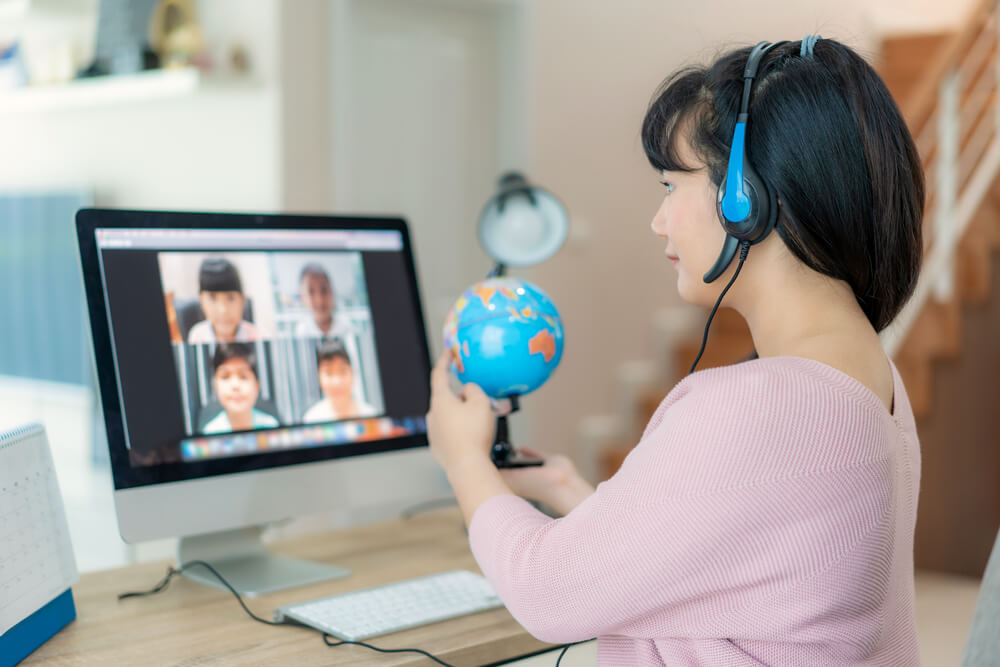
Reduces Class Sizes and Improves Student Engagement
Synchronous learning helps lower the classroom student-to-teacher ratio by supplementing in-person staff with livestreamed instructors. Smaller groups allow for more one-on-one support and foster stronger relationship skills, which are linked to better student performance and fewer behavioral issues.
This stability particularly benefits younger children, who need consistent adult connections for effective social-emotional learning. For example, one 2019 study revealed that students in active learning environments, like small group synchronous sessions, score significantly higher on tests.
Provides Equity Across District Lines
In many states, higher-income districts attract and retain the most experienced teachers, while others are left at a disadvantage. Synchronous learning levels the playing field by delivering the same high-quality, certified instruction to every classroom, regardless of zip code. This approach brings about equity in education by giving students in low-income and rural areas equal access to:
- Advanced courses
- Special education services
- Targeted intervention programs
Stabilizes Instruction Through Lower Turnover Impact
Synchronous learning mitigates the disruptive effects of high teacher turnover rates by ensuring students have uninterrupted access to a certified instructor, even if the local school district faces staffing changes or budget constraints. These classes run on your school bell schedule, providing a continuity that strengthens curriculum delivery and maintains instructional quality throughout the school year, even for specialized subjects.
From Shortages to Solutions with Proximity Learning
All students deserve access to high-quality education. But the challenges facing today’s education system aren’t going away on their own. Districts need solutions that address the root causes, not just the symptoms. Synchronous learning is proving to be one of the most effective tools in reversing trends so students get the stability, expertise, and engagement they need to succeed.
Proximity Learning has been delivering this model for over 15 years, partnering with more than 400 schools and staffing over 3,000 classrooms with certified, experienced educators. We provide a proven, scalable solution that has already improved outcomes for tens of thousands of students across the country. No matter what challenge you need help with, a partnership with us can make the difference.
Let’s create a future where every student has access to a certified teacher. Talk to us today to see how Proximity Learning can help your district close gaps, strengthen instruction, and give students the high-quality, engaging learning experience they deserve.
Ready to take your District's
courses to the next level?
Learn why synchronous
learning dominates in our
comprehensive guide.

Download Now
Ready To Learn More?
Whether you have a question about our solutions or are interested in our services, don't hesitate to reach out to us here. We’ll get back to you as soon as possible.


