

Written: October 2020 Updated: April 2026
Thriving in a virtual classroom doesn’t happen by accident. It takes the right mindset, a willingness to grow, and the ability to adapt instruction to meet students where they are. For many online instructors, success with livestreamed instruction comes from strong connections, keeping students engaged, and creating meaningful learning experiences in real-time.
Odalys Pacheco, one of Proximity Learning’s world language teachers, shows how virtual teachers can successfully navigate virtual instruction while creating meaningful connections with students.
Through her experience, it becomes clear that you don’t need to change everything to thrive in a virtual classroom. You just need to adapt your teaching strategies, use the right digital tools, and find new ways to support students throughout their learning journey.
Here are seven ways she thrives in a livestreamed environment and how other teachers can apply these strategies.
1. Continuing to Learn and Grow as an Online Teacher
From a young age, Ms. Pacheco has been driven by her Dad’s voice at the back of her head saying, “Education is the only way out.” As the first one in her family to have a college degree, she has never stopped learning and pushing herself to be the best she can be.
“If I want to better myself,” Ms. Pacheco said, “If I want to be able to help my family, help my friends, help my community, the best way for me, and the only way I knew how, was to educate myself, and so I did.”
From high school technology electives, earning a master’s degree in instructional technology, and becoming a certified Microsoft Innovative Educator Expert, Ms. Pacheco’s passion for learning all she can about technology allows her to explore different techniques for reaching students in the classroom.
The Takeaway
In online teaching, growth never really stops. One of the most important online teaching skills is staying open to learning, whether that’s through professional development, new digital tools, or evolving teaching methods. When teachers invest in their own growth, it directly impacts student performance and helps create stronger learning outcomes in any virtual learning environment.
2. Getting Comfortable Leveraging Technology in the Virtual Classroom
Success in a virtual classroom often comes down to how well you can use technology to support your students. “It’s something that my dad instilled in me,” Ms. Pacheco said. “He said, ‘Technology is going to be the future. Make sure that you get really good at technology.’”
The Takeaway
Unlike traditional classrooms, where physical presence carries much of the interaction, or asynchronous online models where everything is prerecorded and done independently, synchronous online learning relies heavily on how effectively you use digital platforms, chat functions, and virtual meeting tools like Google Classroom or Microsoft Teams. The more confident you are with leveraging technology, the easier it becomes to keep online students engaged and actively participating.
3. Using Technology to Support Different Learning Styles
After teaching world language for 10 years in North Carolina, Ms. Pacheco worked in instructional technology, where she provided schools in the state with professional development tailored to their needs. She taught teachers how to utilize technology to make learning in the classroom more equitable and personalized to what individual students needed.
One of the teachers that Pacheco taught had three students who needed help reading a novel: one was from Taiwan, one was Japanese, and the other spoke Spanish. With technology, she taught them how to use an app that would translate the entire novel into the language they needed.
“I met with the students, and I said, ‘Hey, all you have to do is click here. It will do the translation for you, and it will even read it out loud for you. It will show you the different grammar parts of a sentence. That way you can practice pronunciation, see the definition, and the translation of the text,’” Ms. Pacheco said. “They were so grateful for it.”
The tool was also beneficial for English speakers in the classroom. Since it could read the novel out loud, Pacheco said they would press the button for the audio whenever they got tired of reading.
“The entire classroom was reading the same novel in four different languages at the same time, and I think that was the best part ever,” Pacheco said. “It was like, wow, you can use technology not just for creative games, but also just to hit all those different learning styles and means.”
The Takeaway
One of the biggest advantages of synchronous online learning is the ability to meet students at their own pace while supporting different learning styles. In a virtual environment, teachers can use supplementary materials, audio tools, and interactive features to personalize the learning journey. This kind of flexibility not only improves student engagement but also helps ensure that more students learn in a way that works best for them.
4. Looking for Career Growth Opportunities
When Ms. Pacheco recently moved to Florida, she said she was looking for more opportunities to grow.
“I lived in North Carolina for 10 years, and I just needed something different,” she said. “I needed something new, more opportunities for me to grow as a professional. That was one of the reasons why I moved to Orlando.”
Pacheco had left teaching world language in the classroom to pursue instructional technology. Years later, she wanted to mix her two passions.
“World language has always been my passion, and technology is just like the cherry on top that makes everything just beautiful,” Ms. Pacheco said. “I wanted to blend both of them. I wanted to blend technology and world language together. What better way to do that than to teach online?”
The Takeaway
Growth is a key part of thriving in online teaching. Many teachers find that stepping into a virtual environment opens new doors, whether that’s through different online courses, new teaching strategies, or opportunities to work with students from different backgrounds. Being open to change can lead to stronger learning experiences for both you and your students.
One of the best practices to grow in online teaching is building on what you already do well. Whether your strength is content knowledge, creativity, or classroom management, combining those strengths with the right digital tools can help you create more engaging lessons. In a virtual classroom, this blend is often what keeps students motivated and actively involved.
5. Teaching Online Classes with Proximity Learning as a Way to Expand Impact
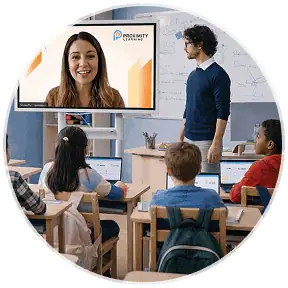
Proximity Learning supports teachers in delivering livestreamed instruction through a structured, classroom-based model that connects them with students across districts. Because the teachers work every day with students and technology, Ms. Pacheco thought it was a perfect next step for her to teach for the company.
“I get to use technology, different applications,” Ms. Pacheco said. “I get to use everything that I have learned in instructional technology, and then come back and apply everything that I had learned as a world language teacher. I think that’s just the perfect combination to be successful as a remote teacher.”
The Takeaway
For many online teachers, synchronous virtual education with Proximity Learning creates opportunities that go beyond what’s possible in traditional classroom settings. Through live sessions, discussion boards, and real-time interaction, teachers can connect directly with students in new ways. This helps improve student performance and allows teachers to expand their reach and support more students across multiple schools.
6. Seeking to be a Role Model for Students
With her hunger to pursue new opportunities and never stop learning, Ms. Pacheco said she wants to be a role model for her students.
“I was teaching them that it’s possible,” Ms. Pacheco said. “It doesn’t matter where you come from. It doesn’t matter the situation. It doesn’t matter where you live. It doesn’t matter your race. It doesn’t matter. If you want to, and if you want it bad, you’ve got to do it.”
The Takeaway
In any learning environment, but especially in livestreamed settings, teachers play a critical role in shaping how students see themselves. Strong communication methods, consistent encouragement, and visible effort help build confidence and strong relationships, even without daily face-to-face interaction. This is a key difference in teaching online: your presence still matters, even through a screen.
7. Staying Motivated by Making an Impact on Students
Not only did Ms. Pacheco work hard for herself, her family, and her community, but she was also motivated by her students. She said many of her students achieved great success after leaving her class.
“Hearing those calls and getting those emails from them, saying, ‘Hey, I went to Columbia, and I got a degree in Spanish because of you.’ I’m like, ‘Wow,’” Ms. Pacheco said. “Stories like that make you keep pushing and make you want to better yourself even more because you’ve just planted that little seed in them.”
The Takeaway
At the end of the day, thriving in virtual education comes down to impact. When teachers focus on supporting students, encouraging critical thinking, and creating meaningful learning experiences, they improve academic success and shape futures. Whether in a physical space or an online environment, the goal remains the same: help students grow, learn, and succeed.
Proximity Learning: A New Way to Teach, A Bigger Way to Impact Students
For many teachers, livestreamed instruction creates new opportunities to grow professionally while reaching students in meaningful ways that aren’t always available in traditional classrooms. With the right support and a willingness to evolve, the virtual classroom becomes a place where both you and your students can build confidence, stay connected, and continue moving forward in your shared learning journey.
Proximity Learning gives teachers the chance to do just that through live, supported virtual instruction. If you’re ready to expand your impact, try something new, and continue growing in your teaching career, this could be your next step. View our online teaching jobs today to see how we can help you enjoy a thriving virtual teaching career.