
 Proximity Learning Team
School systems across the country are opening the 2026-27 school year the same way they closed 2025-26: with classrooms missing a teacher. The nationwide teacher shortage is no longer a temporary disruption or a pandemic-era anomaly. It’s a structural challenge that continues to shape hiring cycles, staffing plans and instructional continuity for districts of every size. The 2026 hiring season saw another wave of retirements, another round of burnout-driven exits and another year of declining enrollment in teacher preparation programs. District leaders are watching vacancies affect every subject, grade level and region. This report breaks down where the gaps are widest, which subjects are hardest hit and why the shortage is growing. It also highlights what districts are doing right now to stabilize instruction, including the growing use of live online instruction to keep students learning without interruption.
Key Takeaways
- Math, science and special education continue to see the worst staffing gaps, with credentialed candidates declining year over year according to the National Center for Education Statistics (NCES).
- Rural districts, high-cost-of-living urban districts, and states with limited collective bargaining access are experiencing the most persistent vacancy pressure.
- The NCES also reports that more than 40 percent of schools started the 2025–2026 year with at least one teacher vacancy, showing the national scale of the challenge.
- Districts are expanding their applicant pools beyond geography, using live online instruction to keep classrooms staffed and instruction moving without delay.
Why the Teacher Shortage Is Deepening in 2026
The teacher shortage in 2026 is not driven by a single factor. It is the result of several long-running trends converging at once. Retirement rates continue to rise as the large cohort of educators who entered the profession in the late 1980s and early 1990s reach the end of their careers. The NCES, in fact, shows a steady increase in retirements over the past five years. Burnout remains a major driver of attrition. Teachers are navigating heavier workloads, more complex student needs and increased data reporting. Statista’s educator workforce survey found that more than half of teachers considering leaving the profession cited chronic stress as a primary factor. At the same time, fewer people are going into education. Enrollment in teacher preparation programs has declined for more than a decade. The NCES also reports that interest in education majors dropped again in 2024 and 2025, especially in high-demand subjects like math and science. With fewer candidates entering the profession and more educators leaving, districts face more and more vacancies that affect staffing stability across states and subjects.
Hardest Hit Subjects
Special Education
Special education remains one of the most challenging areas to staff in 2026. Credentialing requirements are rigorous and the candidate pool is small. The NCES reports that special education vacancies are consistently higher than those in general education roles. Specialist roles like occupational therapists, speech-language pathologists and school psychologists are even harder to fill. Schools are also dealing with increased demand for special needs accommodations and individualized support. As student needs grow, the pressure on special education staffing grows with them. Proximity Learning supports districts with certified special education teachers and livestreamed instruction, but the national pipeline is still strained.
Math and Science
Math and science vacancies also continue to rise across states. These subjects face a unique credentialing bottleneck because candidates with strong STEM backgrounds often pursue higher-paying private sector roles. The NCES shows that math and science positions have some of the highest vacancy rates in the country, and Statista’s STEM workforce trends confirms this. Districts report that, even when they find candidates, retention can be difficult. Teachers with STEM credentials have more mobility and more alternative career options. Proximity Learning’s client data shows that math and science classrooms are among the most common subjects filled through live online instruction.
World Languages
World language teachers are also in short supply nationwide. Fewer education candidates are pursuing world language credentials and many states report declining enrollment in language certification programs. Statista notes that world language vacancies have grown steadily over the past three years. Districts also face competition from private sector roles that value bilingual and multilingual skills. Proximity Learning’s market data shows that world language is one of the fastest-growing categories for live online instruction.
Hardest-Hit Regions
Rural Districts
Rural districts have a hard time filling vacancies due to limited local labor pools and geographic isolation. The NCES reports that rural schools have higher vacancy rates than suburban schools. Proximity Learning partners with rural districts to provide livestreamed instruction that keeps classrooms staffed even when the local labor market is thin.
High-Cost-of-Living Urban Districts
Urban districts in high-cost-of-living regions face a different challenge. They have larger labor pools, but the higher cost of living and lower salaries makes it difficult for teachers to remain in the profession long term. Statista’s workforce affordability data indicates that teachers in major metro areas spend a higher percentage of their income on housing. This isn’t necessarily offset by higher salaries. Proximity Learning’s partnerships with Chicago Public Schools and Memphis-Shelby County Schools show how synchronous virtual instruction can stabilize staffing in high-demand subjects.
Right-to-Work vs. Union States
Another fly in the teacher vacancy pot is the right-to-work states. States with limited collective bargaining access often experience higher turnover because teachers have fewer protections and less leverage in negotiations. In fact, NCES studies show that vacancy rates tend to be higher in states with less union support. As a result, districts in these states are expanding their applicant pools beyond geography to stabilize staffing.
What Districts Are Doing About It
Expanding the Applicant Pool Beyond Geography
Districts are widening their search beyond local candidates. Gartner’s workforce flexibility research notes that organizations across industries are expanding talent searches beyond geography. These areas may offer incentives for moving to their district, or may focus on the lower cost of living and commuting times. Proximity Learning supports this shift by pairing vacant classrooms with certified teachers within days. IMG 2
Partnering With Synchronous Virtual Instruction Providers
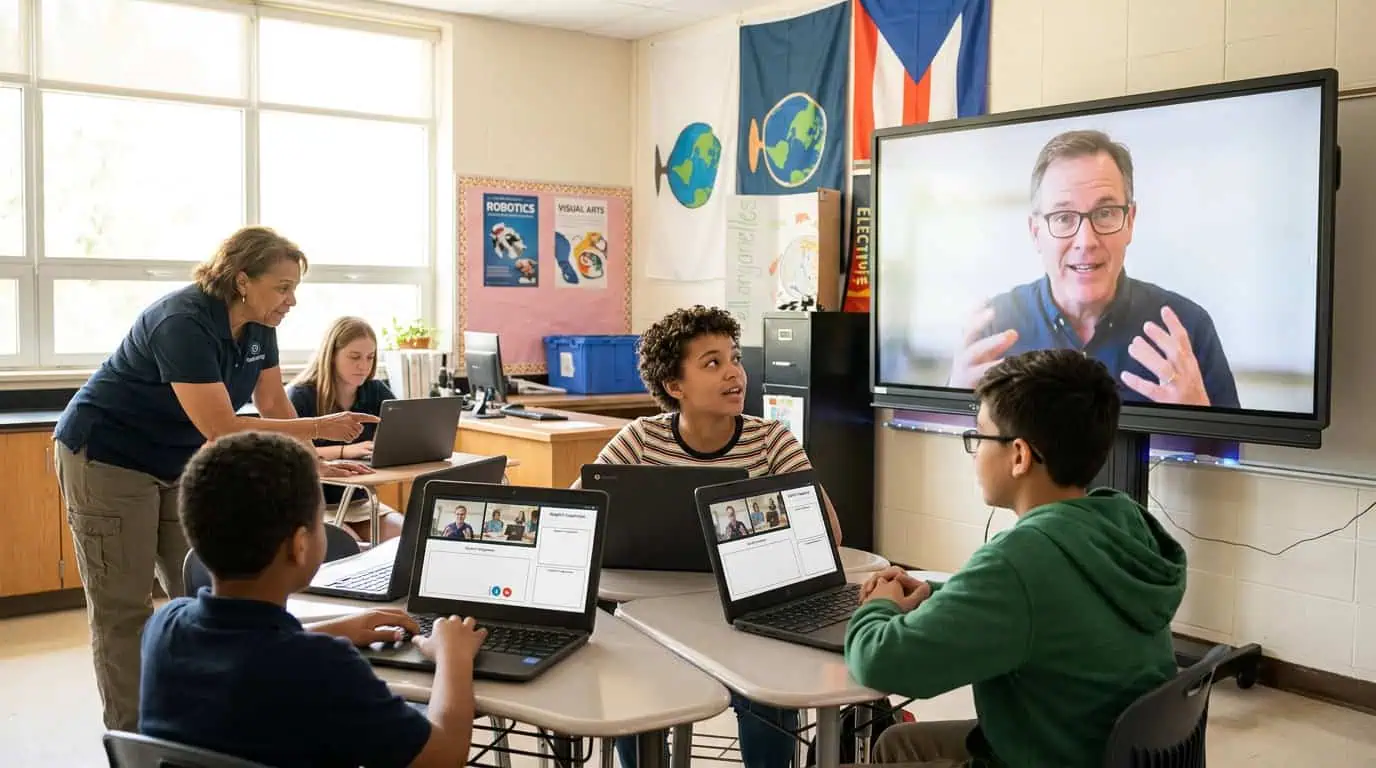
Synchronous virtual instruction (live online instruction) is becoming a core staffing strategy for districts facing persistent vacancies. It includes real-time, livestreamed instruction delivered by certified teachers who follow the district’s curriculum and work directly with students. Proximity Learning’s client data shows that districts save an average of $5K to $10K per teacher* when they use synchronous virtual instruction compared to traditional hiring.
Building Retention, Not Just Recruitment into the Budget
Districts are shifting from a recruitment-first mindset to a retention-first strategy. Organizations with strong retention plans experience fewer disruptions and lower long-term costs. These districts focus on supporting new teachers with mentoring programs, administration support and growth opportunities. Retention is also tied to instructional continuity. Proximity Learning supports districts with certified teachers who deliver consistent instruction, allowing local educators to focus on their core responsibilities without absorbing responsibilities from additional vacancies. *Varies based on state
Where Do We Go From Here?
The teacher shortage by state continues to affect the 2026-27 school year. Special education, math and science remain the hardest subject vacancies to address, while rural districts, high-cost-of-living urban districts and states with limited collective bargaining access face the most pressure. Districts are responding by expanding their applicant pools, partnering with live online instruction providers and building retention into their budgets. If your district is navigating vacancies or planning for the next hiring cycle, the Proximity Learning team can help you assess your staffing exposure and identify fast, effective solutions. Talk to us about your district’s needs and see how livestreamed instruction can keep your classrooms staffed and your students learning. Talk to Us
Frequently Asked Questions
What subjects have the biggest teacher shortages in 2026?
Special education, math and science have the highest vacancy rates in 2026. The NCES shows persistent gaps in these subjects across states, with many districts carrying openings for months. These areas also face credentialing bottlenecks that limit the number of qualified candidates.
How can districts recruit teachers when the local labor pool is empty?
Districts are widening their search beyond geography, bringing in certified teachers from other states and time zones. Many also use synchronous virtual instruction to keep classrooms staffed without waiting for local candidates. Expanding talent pools by looking far afield is now a standard workforce strategy.
How many classrooms are affected by teacher vacancies nationally?
The NCES reports that more than 40 percent of schools started the 2025–2026 year with at least one teacher vacancy. That number varies by state and subject, but the national trend shows how widespread and persistent the staffing challenge has become.
Is the teacher shortage only a rural problem?
No. Rural districts face thin labor pools, but high-cost-of-living urban districts and states with limited collective bargaining access also experience significant vacancy pressure. Shortages exist across regions, subjects and grade levels, making this a nationwide challenge rather than just a rural one.
Does hiring a virtual teacher mean lowering instructional quality?
No. Synchronous virtual instruction is real-time teaching delivered by certified educators who follow district curriculum and work directly with students. The National Virtual Teacher Association sets quality standards for virtual instruction, and Proximity Learning’s post-test gain data shows strong student growth across subjects.