

Written: January 2023 Updated: June 2024
Building durable skills in live virtual classrooms – Why is it important?
Durable skills vs. perishable skills
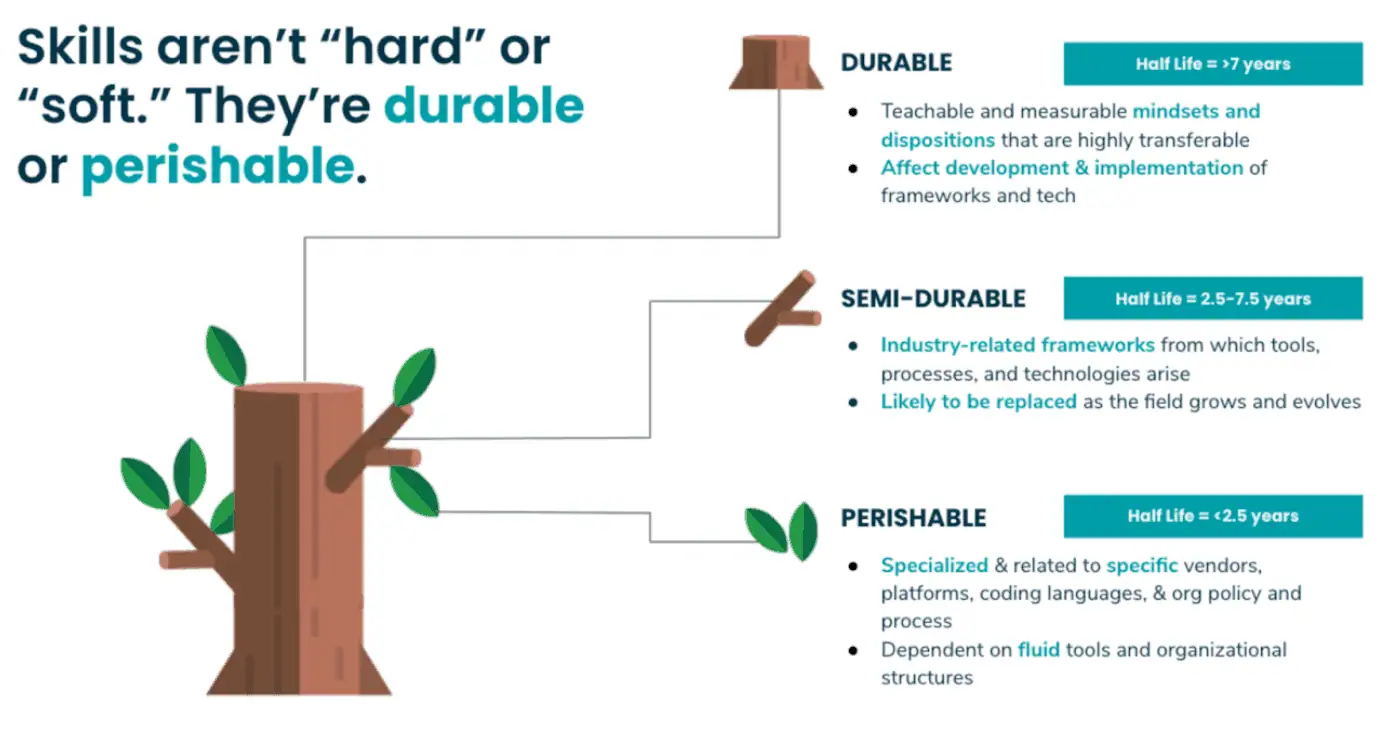
Formerly known as “soft skills” and “hard skills” – upskilling programs have moved towards new identifiers to explain the types of skills employers are looking for in modern job markets. These skills are now identified as durable (formerly soft) or perishable (formerly hard) skills. It is important to build a variety of skill sets to prepare students for the workforce in the every-changing corporate landscape.
What are durable skills?
Durable skills include critical thinking, communication, collaboration, and creativity – as well as character skills like fortitude, growth mindset, and leadership are crucial for individuals both in their academic and post-secondary careers whether they decide to attend college, attend a trade school, join the military, or join the workforce. They are a combination of how a person uses what they know in life and integrates it in the workplace. Skills like critical thinking, communication, collaboration, and creativity – as well as character skills like fortitude, growth mindset, and leadership are crucial for individuals both in their academic and post-secondary careers whether they decide to attend college, attend a trade school, join the military, or join the workforce.
Durable skills are considered highly transferable as they are skills that can be used and implemented regardless of the organization or industry an individual works within. These strengths allow people to learn new job functions and move into different departments, transforming employees into long-term investments. People with strong durable skills are more easily adaptable throughout their careers.
What are perishable skills?
Perishable skills are typically specialized and related to specific industries, platforms, organization structures, specific coding languages, policies and/or procedures. These skills are job specific and are typically trained in onboarding or learning and development over the course of time spent within an organization or industry.
This is the true job responsibility related to the technical work. For example, an electrician learns a perishable skill associated with installing lighting in a building. While that knowledge is essential to perform their job, it does not help them when they are promoted to manager.
Why is there a shortage of durable skills?
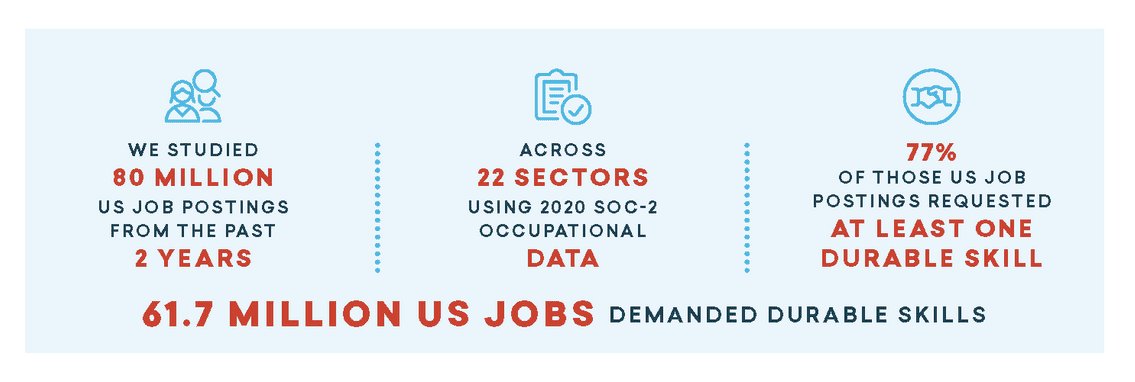
According to Gordan Pelosse’s Forbes Article “research from America Succeeds, leveraging data from 82 million job postings, found that roughly seven out of 10 requested skills on job postings were classified as durable skills” but these skills were some of the most difficult to measure and find in the current workforce.
Whereas perishable skills are static, easily taught, and measurable and can be trained on-site in almost any industry, durable skills are able to expand across the various attributes required to interact with others and be successful in the workplace.
Many experts believe that as we move towards technological advancements and become more dependent on technology, interpersonal skills can often be neglected. Therefore it becomes imperative to make sure that we are building skills that prepare individuals for team collaboration, creation, and model good leadership skills so that they can be successful no matter where or who they work with.
As industries become more specialized and niche, it is crucial for the development of durable skills to take place well before an individual enters the workforce or even post-secondary options like technical/trade schools and traditional universities or colleges.
Teachers can work on fostering an environment in their classrooms whether in person or online that support the acquisition of those highly coveted durable skills.
How can classrooms build durable skills?
One of the simplest ways to build durable skills is to implement project-based learning activities in the classroom. Creating these types of student-centered lessons require students to work as a team in the implementation of a specific project or goal and can help them practice skills like collaboration, active listening, critical thinking, and creative problem-solving.
Plus, project-based learning gives students the opportunity to practice real-world jobs roles that might interest them in the future. Most importantly though, it gets students involved in building and maintaining effective communication skills like making eye contact with their audience, speaking clearly so others can understand, and taking turns listening in order to make sure all voices get a chance to contribute.
Project-based or cooperative learning activities can ultimately allow students the opportunity to take risks in a safe environment and therefore develop durable skills over a long period of time. Teachers can even help students highlight which roles are developing specific durable skills and have students mindfully assess each other and themselves on the growth of those durable skill sets.
Whether it is online or in the brick and mortar classroom, teaching students the value of lifelong types of durable skills and how to foster their own learning of these skills creates lifelong learners. This can help set them up for future success outside of the classroom and ultimately in the ever-changing world and eventually, the future workforce.
If you want to impact students’ lives, apply for a position with Proximity Learning today.
Learn more about Proximity Learning’s mission to provide equity in education to 1 million students.