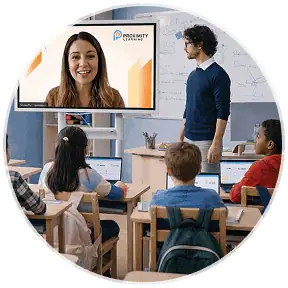


Math is one of those subjects where students need to do more than watch someone else find the answer. They need to work through problems, ask questions, make mistakes and explain their work. So, can teaching math online really provide that kind of engaging experience? With live, interactive instruction from a certified teacher, it can. Effective virtual math instruction keeps students actively solving and thinking while giving teachers opportunities to see where understanding breaks down. For district leaders facing math vacancies, synchronous instruction expands access to qualified teachers without turning student learning into independent screen time. The teacher may be online, but the problem-solving stays live, collaborative and connected.
What is Synchronous Virtual Math Instruction?
Synchronous virtual math instruction connects students with a certified math teacher who teaches live from another location. Unlike asynchronous online learning, where students may work through instructional videos or assignments at their own pace, synchronous instruction keeps the teacher and students together in real time. Students remain in their physical classroom with an in-person facilitator, which creates opportunities to ask questions, work through math problems and get immediate support throughout the lesson.
How Synchronous Virtual Math Instruction Works
The virtual teacher livestreams into the classroom through videoconferencing software and leads the math lessons just as they would during in-person instruction. They can model a problem, pause to check understanding, call on students and watch as students solve problems themselves. An in-class facilitator helps manage the physical classroom and supports day-to-day logistics. Technology plays different roles within that experience. A Learning Management System (LMS) serves as the central hub for attendance, grades, assignments and course resources. Interactive online tools and digital tools can then be used for quizzes, collaborative problem-solving, virtual manipulatives and dynamic graphs. Together, these systems allow teachers to create an active online environment while keeping instruction aligned with the district’s curriculum, class schedule and expectations.
The Advantages of Synchronous Virtual Math Instruction
Moving a teacher online shouldn’t mean students have a less interactive math experience. Done well, the format can actually create more ways for teachers to see student thinking, respond in the moment and make challenging mathematical concepts easier to explore. Here are some advantages:
- Expands access to certified math teachers: Schools can expand their hiring reach when a qualified mathematics teacher or math specialist isn’t available locally.
- Real-time feedback: Teachers can spot misunderstandings as students work and clarify basic concepts before confusion carries into the next lesson.
- More visual learning: Interactive graphs and digital manipulatives can help students see relationships and build conceptual understanding of abstract math concepts.
- Active participation: Interactive activities give students opportunities to solve, explain, question and collaborate instead of passively watching a screen.
- Personalized support: Teachers can adjust practice and provide personalized instruction based on each student’s ability, needs and progress.
- Greater instructional continuity: Virtual staffing can help schools maintain consistent access to qualified teachers throughout the school year, even when local math positions are difficult to fill.
How Virtual Teachers Make Online Math Instruction Work

When implementing virtual instruction, the technology matters, but what teachers ask students to do with it matters more. Effective online math keeps students thinking, talking and working through problems throughout the class. The goal isn’t to recreate an in-person lecture on a screen. It’s to use live interaction to make mathematical thinking visible.
1. Make Students Solve, Not Just Watch
Watching an instructor complete a problem can make math look deceptively easy. Students need opportunities to try strategies, get stuck and work toward solutions themselves. A teacher might demonstrate an example, then pause and have students attempt a similar problem before moving on. That productive struggle helps students develop stronger problem-solving skills and gives the teacher a clearer picture of what they actually understand. Instead of immediately supplying an answer, teachers can use questions and hints to help students find their own path to the solution. This can help boost student achievement and confidence.
2. Ask Students to Explain Their Thinking
A correct answer doesn’t always mean a student understands the underlying concept. Asking students to explain how they reached an answer reveals their reasoning and helps teachers catch misconceptions and learning gaps that might otherwise go unnoticed. Students can also compare different approaches to the same problem. This shifts teaching away from memorizing a single procedure and toward deeper knowledge of why the math works.
3. Make Abstract Math Visual
Because mathematics is highly visual, digital instruction gives teachers powerful ways to demonstrate relationships that are difficult to communicate through numbers alone. Interactive whiteboards, virtual manipulatives and dynamic graphing tools let students see mathematical ideas change in real time. Visual representations can be especially useful when teaching:
- Fractions
- Percentages
- Algebra
- Geometry
Students can manipulate shapes, adjust values, or watch a graph respond as an equation changes. These experiences can make abstract concepts more concrete and accessible.
4. Connect Math to Real-Life Problems
Students are more likely to stay invested when they understand where a concept shows up beyond their homework. Teachers can build problems around familiar situations like budgeting, measurement, travel, or sports statistics to give students practical applications for math. Real-world applications don’t replace foundational practice, but they do give students another way to explore what they’re learning and understand why those skills matter.
5. Build Collaboration Into Problem-Solving
Math doesn’t always need to be solitary. Breakout rooms and other collaborative activities allow students to tackle problems together, compare strategies and talk through disagreements before sharing their reasoning with the class. Open-ended problems work particularly well because there may be multiple ways to solve them. Collaborative problem-solving can help engage students and build classroom connections while reinforcing that the process of reaching an answer matters as much as the answer itself.
6. Use Immediate Feedback to Keep Students Moving
Quick polls, interactive quizzes and short skills checks give teachers an immediate view of how the class is progressing. If several online students make the same mistake, the teacher can address it right away rather than discovering the misunderstanding on a later assessment. Timely feedback also helps keep students engaged because they know their work is being seen. When students can ask questions, correct mistakes and recognize their own progress, they’re more likely to build the confidence to keep tackling challenging problems.
7. Use Interactive Digital Tools
The best online resources don’t add technology just for the sake of it. They give students another way to interact with a concept, show what they know, or get feedback while they’re still learning. When used intentionally, these tools can turn the computer from a place students watch a lesson into a place they actively do math. They include:
- Interactive whiteboards: Allows students to write, draw and work through math problems
- Digital manipulatives: Interactive models that let students move and adjust objects to explore abstract math concepts visually
- Desmos: Dynamic graphing and interactive activities
- Open Middle: Open-ended problems to encourage testing strategies and reasoning
- Zearn: Self-paced lessons and practice for elementary grades
- Game-based assessments: Interactive quizzes and activities that help teachers see what students understand.
These same interactive tools can also support math tutoring and online tutoring, giving students targeted practice or additional help when they need it.
Bring Certified Math Teachers Into the Classroom With Proximity Learning
So, can you really teach math online? Absolutely, but students still need a real teacher who can challenge their thinking, answer questions and help them work through difficult concepts in the moment. The format changes, but strong instruction remains at the center. That’s exactly what Proximity Learning has spent more than 15 years doing. Certified teachers lead live, synchronous classes while an in-person facilitator supports students in the physical classroom. And the results show what’s possible: Proximity students saw post-test gains of 22% in Algebra II, 18% in Geometry and 11% in Algebra I. Your students deserve a qualified math teacher, even when there isn’t one available down the hall. Talk to us today to learn how Proximity Learning can help bring live, engaging math instruction to your classrooms.