

Written: July 2023 Updated: March 2026
Education is a fundamental right for all American children, yet ongoing education challenges like the teacher shortage and equity gaps continue to limit access to quality instruction. As schools search for sustainable solutions, online learning and thoughtfully designed online education models have emerged as powerful tools to close persistent gaps. The conversation is no longer about whether virtual learning has a place in K–12, it is about how to implement it in ways that truly serve students.
When done well, the benefits of virtual learning platforms include expanded access, strengthening the learning experience, and supporting students who might otherwise fall behind. The key is ensuring that these virtual education systems prioritize real instruction, real connection, and real accountability. Technology alone is not the solution, but when paired with certified teachers and intentional design, it becomes a bridge to educational equity.
What Is Virtual Learning?
At its core, virtual learning refers to instruction delivered through digital tools rather than exclusively in a traditional classroom setting. It can include distance learning, structured online courses, and full online school models. It’s worth noting that not all virtual learning is the same. What Proximity Learning delivers is synchronous instruction, which is fundamentally different from the pre-recorded video lectures and self-paced models that many associate with pandemic-era learning.
There are two primary formats within online learning: asynchronous and synchronous.
Asynchronous Virtual Learning
Asynchronous models rely on recorded lectures, uploaded course materials, and assignments completed at a student’s own pace. While this approach offers flexibility and can support self-paced learning, it often limits real-time interaction, class discussions, and immediate feedback, elements that many online learners need to stay engaged.
Synchronous Virtual Instruction
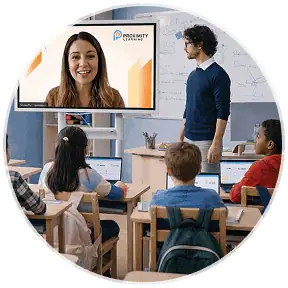
Unlike asynchronous instruction, synchronous virtual instruction brings students together in real time within a classroom. Certified teachers lead live online classes that follow the school’s bell schedule, while students remain physically together in a classroom supported by an in-person facilitator.
Instruction is delivered through video presentations and interactive tools, while a Learning Management System (LMS)—such as Canvas or Schoology—tracks attendance, grades, and assignments. This structured online learning model blends the accountability of a traditional classroom with the flexibility of online learning platforms, creating a more connected and responsive learning environment for both younger students and high school students.
The Benefits of Virtual Synchronous Learning
Synchronous instruction combines structure, accountability, and flexibility—offering some of the most impactful benefits of online learning when implemented thoughtfully. These include:
- Real-time engagement: Live instruction allows online students to participate in discussions and collaborate with fellow students rather than learning in isolation.
- Consistent structure: Following the school bell schedule provides routine within the learning environment, supporting self-discipline and stronger time management skills.
- Personalized support: Teachers can adjust instruction to meet each student, even if they have a different learning style, creating a more personalized learning experience.
- Expanded course access: Schools can offer many online courses, including specialized subjects, without being limited by local hiring challenges.
- Increased scheduling flexibility: Synchronous models maintain structure while offering scheduling flexibility across districts.
- Cost savings for districts: Schools can reduce commuting costs, certain physical resource expenses, and redirect funds toward other critical programs.
- Improved accountability: Real-time monitoring through an online learning system provides transparency in student progress and performance.
This model also, of course, supports equitable access to certified teachers and core and specialized courses, along with support for higher education paths and career advancement opportunities.
How Virtual Learning Platforms Promote Educational Equity in K–12 Schools
The benefits of online instruction become especially meaningful when viewed through the lens of equity. Synchronous online learning helps ensure that students—regardless of geography—have access to certified teachers and rigorous coursework. By expanding access to high-quality online education, schools can reduce disparities that often arise when vacancies go unfilled.
This model supports a more personalized learning experience by allowing teachers to identify learning gaps in real time and adjust accordingly. It also strengthens parental engagement and ensures that students remain connected to structured instruction rather than relying solely on independent study. When thoughtfully designed, online learning platforms encourage students and create opportunities for those who may otherwise lack access to advanced coursework or specialized instruction.
4 Ways Synchronous Instruction with Proximity Learning Bridges the K-12 Equity Gap
With teacher shortages making it increasingly difficult for students, particularly those from low-income communities, to access quality education, the need for innovative solutions is important now more than ever.
But there is hope. Proximity Learning, an innovative virtual learning platform, is providing a solution that is bridging the equity gap in education by filling teacher vacancies and providing access to quality education to students across the country. At Proximity, our mission is to bring #EquityForOneMillionStudents, and we are well on our way. Here’s how.
1. Expanding Access to Certified Teachers Nationwide
Through Proximity Learning’s live, virtual learning service, certified teachers can teach students in live, online classrooms from anywhere. This means that schools that have been struggling to fill teacher vacancies can now access a pool of highly qualified teachers who are ready, willing, and able to teach their students. Moreover, schools, both rural and urban, can use Proximity Learning to provide a broader range of courses, combat educational inequality, and ensure that students benefit from expert instruction.
2. Supporting Social, Emotional, and Cultural Needs
Proximity Learning also provides a holistic approach by addressing social, emotional, and cultural needs. Students from low-income communities and those who are learning English as a second language face unique challenges that require dedicated and individualized attention. Proximity Learning provides students with direct access to educators who are trained in culturally responsive teaching and social-emotional learning. This supportive approach enables students to be holistically nurtured and encourages excellent academic performance, regardless of where they are located.
3. Delivering Personalized Instruction Through Data
Proximity Learning’s virtual platform also provides real-time monitoring and analysis of student progress. This functionality enables teachers to identify students who are experiencing learning loss, both individually and collectively. This insight allows teachers to adjust their instruction styles, tailor lessons, and provide students with individualized assignments to meet their unique needs.
By providing personalized learning experiences, Proximity Learning ensures that students receive instruction that is tailored to their learning needs and learning styles.
4. Providing Cost Savings and Financial Flexibility
Finally, Proximity Learning provides significant savings for schools that adopt its platform. Schools may experience a reduced need for physical classroom space, textbooks and instructional materials, and other resources. This, in turn, helps schools to save valuable resources that can be directed toward critical programs, such as after-school programs, extracurricular activities, and tutoring opportunities.
By providing schools with increased financial flexibility, Proximity Learning contributes to a reduction in the equity gap by enabling schools to offer educational opportunities that would otherwise be impossible due to budget constraints.
You Can Empower Students Nationwide with Proximity Learning
Sustainable progress in education requires practical solutions that address today’s realities. As an educator, you can contribute to this change by adopting such technology in your classrooms. Together, we can help empower students and disrupt the hidden achievement gap by providing quality education opportunities to all students, regardless of their backgrounds or location.
Proximity Learning is helping to bridge the equity gap by filling teacher vacancies, providing personalized learning experiences, and promoting student success. We combine over 15 years of experience in synchronous instruction with a proven model that serves 400+ partner schools and have staffed more than 3,000 classrooms nationwide.
By embracing structured, live online learning, schools can provide students with consistent instruction, personalized support, and expanded access to opportunity. The future of equitable education depends on solutions that blend innovation with accountability.
Talk to us today to learn how Proximity Learning can support your district’s goals and help bring high-quality instruction to every classroom.
You can also read more from our Innovations series here.