
Any teacher can tell you that no two students are the same. They are 100% right. Each student is unique in their learning capabilities and styles, and this is something educators should always be ready to adapt to. Despite great advancements in educational technology, one thing will always remain: learning gaps. Students learn at different paces, so some fall behind. It’s inevitable. But the expert teacher is always prepared to bring their students up to speed, whether it be through one-on-one instruction or a tailored method.
What are learning gaps in education?
A learning gap is the difference between what a student knows and what they are expected to know by a certain grade level. According to The Glossary of Education Reform, learning gaps can range from a lack of specific skills to broader learning standards, whether that be a student unable to learn a letter sound or being unable to read. If left unaddressed, learning gaps can grow and become detrimental to a student’s education as they steer away from their projected growth. For teachers, it is crucial to always be aware when a student is not comprehending a lesson, no matter the subject and no matter the distance.
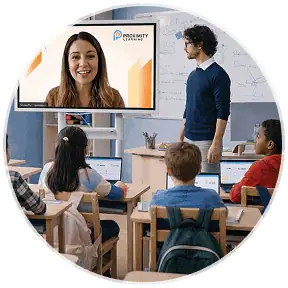
Just because a teacher may be connected virtually does not stop them from recognizing when their students need extra help. At Proximity Learning, our instructors have proven that their students are capable of more than just meeting the standard. Success is not a dream; it’s the goal. When teachers see a learning gap within a student, rather than asking “What happened?” they ask, “What can we do?” For Proximity teachers, closing the learning gap creates confidence, equity, and opportunity.
How do virtual teachers identify learning gaps?
Virtual teachers can identify their students’ learning gaps through assessments, one-on-one instruction, or in-class participation. For Proximity Learning instructor Stephanie Winfrey, every click or silence can mean something more. “If they’re not participating in a group or if they’re not participating in the virtual whiteboard…I know I need to circle back around and reteach something,” said Ms. Winfrey.
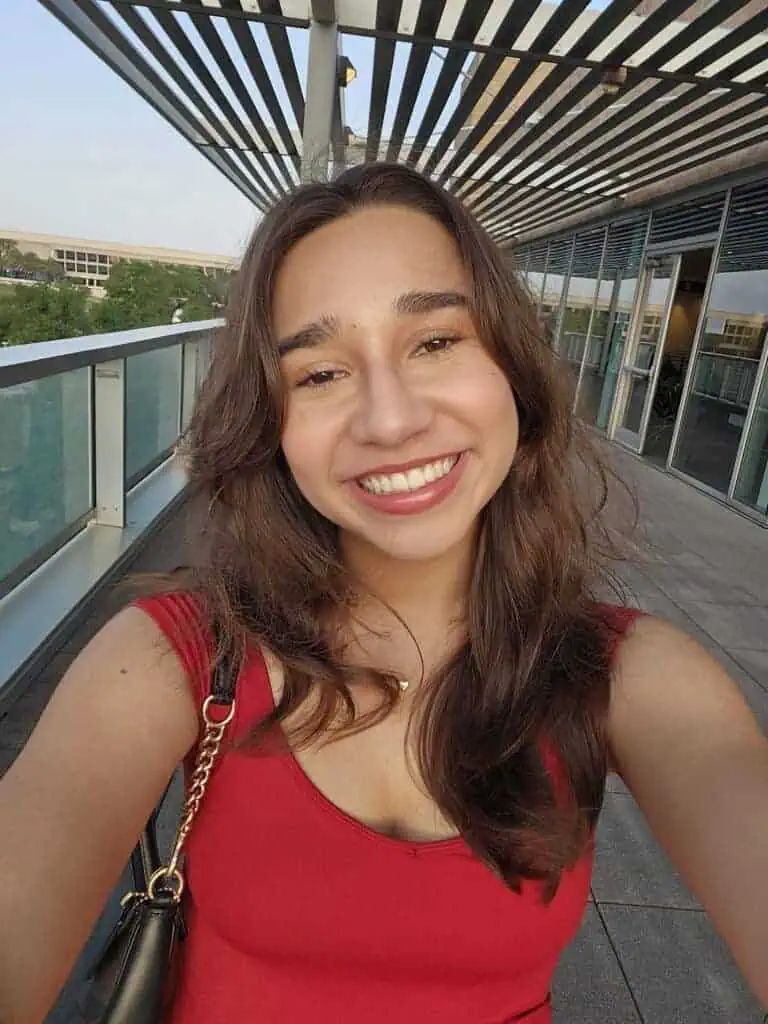
Now in her fourth year teaching English Language Arts to 7th and 8th-grade students in Maryland, Ms. Winfrey is an expert at recognizing when certain content isn’t connecting. For students who may not be avid participants but are still attentive learners, she leans on formative assessments to uncover where they might be struggling. Ms. Winfrey’s students take i-Ready assessments every couple of months, which provide her with data on which specific areas students do not understand.
Observing student behavior in early grades
Where participation cues may not be all telling, observation can help. Anna Deats, a Proximity Learning certified teacher, teaches Kindergarten, 1st-grade, and high school students in West Virginia, despite being from Texas. Working with Kindergarten and 1st-grade virtual students, Mrs. Deats is ready to catch when her students may be confused. “For me, it’s all observation. I set up my classroom to where it’s okay to make mistakes.” Mrs. Deats encourages even her shiest learners to signal when they’re uncertain about a topic.
The same focus on confidence carries on over to her high school students in her Character Education class, who can sometimes be shy in sharing their experiences with the rest. “They’ll put stuff in the chat box, because they don’t really like talking out loud,” she explained. “I’ll just kind of look at them, and I’m like, ‘Can I share what you said? It was awesome.’ And then they just kind of get this look on their face, like, ‘Yeah, of course you can,’ and then I’ll just pump up whatever they said, and hopefully, at the same time, just build up their self-confidence.”
Encouraging student self-awareness
Helping students take ownership of their learning is a crucial part of addressing gaps before they grow. Proximity teacher Eugenia Koerner teaches 6th graders in West Virginia and also leads her students to be accountable for their learning. “Day one, the first thing I always ask students is to rate [themselves] on a scale of 1 to 5, how [they] identify in this topic area,” said Ms. Koerner. “No, it doesn’t give me specifics about their content knowledge, but just knowing their confidence level with the content is a really important place to start.”
How do virtual teachers individualize lessons?
Knowing where your students are falling behind is one thing, but making sure you meet them where they are is equally important. For Ms. Winfrey, who currently teaches many English as a second language (ESL) students, individualization can go beyond her lessons. “I’m constantly translating the documents and activities that we’re doing,” said Ms. Winfrey. “We’ve labeled things in the classroom in English. I’m very grateful because we have a lot of students in there who speak both languages, and we pair them up. That helps them, help me.”
But when her students get that special support they need, they learn to grow independent in their own work. “A lot of them want that English version. So a lot of the time I’ll let them do it in their language and let them translate it to English, highlight the words they know, or form sentence frames,” explained Ms. Winfrey. “I’ve learned just as much from them as they have from me this year.”
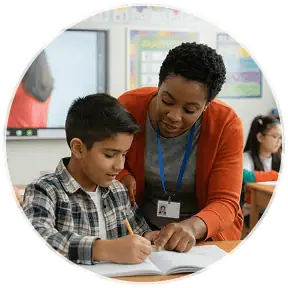
Individualized learning will often take form through tutoring sessions for Proximity teachers. When Mrs. Deats’ Kindergarten and 1st-grade classrooms were combined for the second time in two years, she knew how to prepare her kids. “Since we merged, I had to figure out how I was going to make sure that my kindergarten students knew letter sounds,” said Mrs. Deats. “I 100% believe that I had my kindergarten kids ready to enter first grade this year because we put in 30-minute tutoring once a week. That was intense tutoring, one-on-one with the student and working with them in class.”
How do virtual teachers measure student progress?
Virtual teachers measure student progress through behavior, grades, and achievements. While scores matter, sometimes progress is best conveyed through persistence and self-growth. Ms. Koerner recalled the time she had a student last year who almost failed the term because they did not turn in assignments and participate. “And she decided she had had enough of that, and so for a while, she was meeting with me. She asked, ‘Well, how do I stay on top of my grades? How do I make sure that I’m turning things in on time?’” said Ms. Koerner. “And after we worked together on it, that next term, she had an A in math. She actually had an A in math for the rest of the year.”
Students can show growth in multiple ways; it is up to the teachers to be able to recognize when their students are making a change. Ms. Winfrey was fortunate to see it in one of her 7th-grade ESL students. “We just recently recognized as Student of the Month, one of our ESL students who has come so far in communicating with us from the beginning of the year,” explained Ms. Winfrey. “He has just really opened up. He’s talking to me in the chat; he’s just very, very engaged. I think it took him a minute to see if he could trust me, if I was going to leave him behind, or see that I cared and keep pushing.”
By rewarding courage and consistency, Ms. Winfrey not only reaffirmed his academic achievement but also his trust in his teacher. Progress will often be seen through report cards and exam scores, but it is these self-motivated changes that demonstrate true growth. Proximity Learning teachers will always ensure that students’ success, no matter where they come from, is visible to all. Especially the students themselves.
Proximity Learning teachers empower your students to grow
Every student has their differences. When teachers use their tools, time, and skills to recognize this, the impact can go beyond what one expects. Not only is virtual instruction capable of connecting students and teachers to each other, but it can also fill learning gaps. By using individualized learning strategies, technology, and collaboration, Proximity Learning teachers can empower students to grow.
Proximity Learning creates more equitable resources for every school teacher and more equal opportunities for every student. Contact us to learn more about how you can place certified teachers ready to support your students in your classrooms.