
If you ask a Georgia superintendent what keeps them awake at night, staffing challenges likely top the list. Between 2023 and 2025, Georgia schools grappled with around 6,000 teaching positions left vacant or filled by educators lacking full certification. Enter Proximity Learning, a solution that brings certified teachers live into classrooms from anywhere in the country, while an on-site facilitator supports students face-to-face. Georgia is quickly emerging as a leading state for Proximity Learning’s synchronous teaching approach, with districts across the state already embracing it. This piece walks through how Georgia is bridging the teacher shortage: where the need is greatest, how synchronous instruction is making a difference, why this model works, and what you should know before turning to synchronous, virtual teaching.
Key Takeaways
- Georgia grapples with challenges and shortages that are plaguing the whole country, especially in special education, math, science, English language arts, and elementary education.
- Georgia’s districts are increasingly turning to virtual teachers. Proximity Learning is currently serving 10 Georgia clients.
- Certified teachers are matched to districts without boundaries and quickly. Proximity Learning connects schools with qualified educators just days after onboarding.
- Districts are free from annual contracts, allowing them to address immediate needs and adapt as circumstances evolve.
Where Georgia’s Teacher Shortage Is Most Acute
Georgia’s Department of Audits and Accounts’ “Retired Teachers Return to Work” report offers a clear picture as to why the state is turning to synchronous, virtual teaching. In their 2025 performance audit, the Department of Audits and Accounts found that school systems reported about 6,000 vacant or not fully certified positions in fiscal 2023 through 2025, against a statewide workforce of about 125,000 teachers. The Georgia Professional Standards Commission (GaPSC) counts a position as vacant if it is unfilled or filled by someone not fully certified, such as a substitute or an out-of-field teacher. The state’s Department of Education has consistently named five areas of highest need: special education, math, science, English language arts, and elementary education, with average reported vacancies of nearly 5,000 across those subjects alone. By region, average vacancies ranged from 19 to more than 2,500 across the state’s Regional Education Service Agencies. This isn’t an isolated issue; nationally, 64 percent of public schools cited a lack of qualified candidates as a top hiring challenge for 2024–25.
Why Georgia Districts Use Synchronous Virtual Instruction
Filling Hard-to-Staff Subject Areas
Vacancies in special education, math, world languages, and science often take longer to fill with fully certified teachers. To address open vacancies and teaching shortages, districts turn to Proximity Learning certified teachers, who offer live, synchronous instruction in all core subjects and world languages, including Spanish and American Sign Language. Proximity Learning also offers an extensive line of certified special education teachers, who are hard to find or retain, including case managers, occupational therapists, speech-language pathologists, and school psychologists.
Supporting Rural and Small Districts
Smaller school districts often have fewer openings but still struggle to hire qualified teachers, especially in rural areas. Proximity Learning addresses this gap by supplying these districts with certified teachers within weeks. Even districts with just one or two open jobs can use the flexibility of online synchronous teaching, especially since the network’s educators quickly adjust and follow the district’s bell schedule and curriculum.
Not Worse or Better, a Convenient and Fast Solution
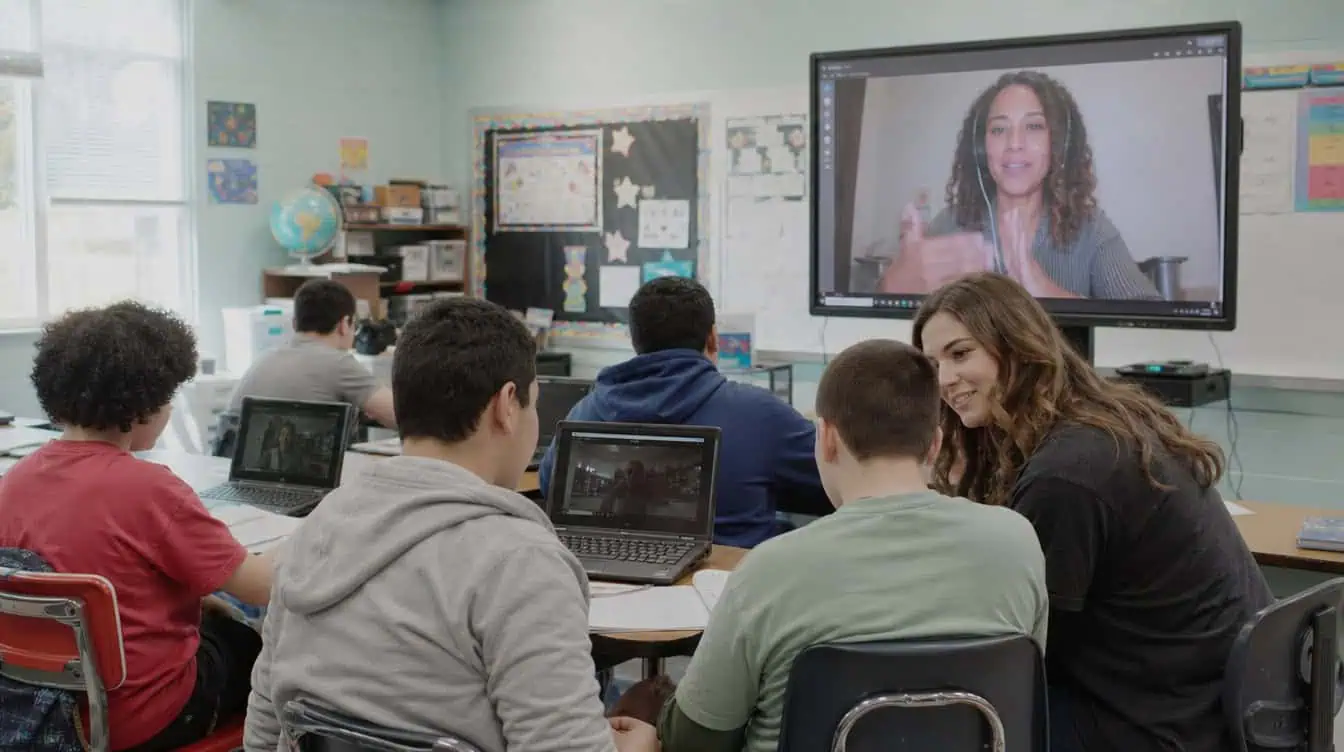
Each livestreamed class is taught by a real, live teacher and includes a second adult physically in the room. The in-classroom facilitator manages the classroom, encourages student participation and helps the day run smoothly, while the certified teacher handles instruction, assessment and grading. Districts choose the primary facilitator for each classroom during planning, and Proximity Learning trains them before classes begin. The teacher livestreams according to the school’s bell schedule, so students’ school day is not disrupted. For a Georgia principal or parent, this means a familiar adult is in the room and a certified teacher leads the lesson. Support for students with an Individualized Education Program (IEP) or a 504 plan is not a deterrent. Proximity Learning plans for it.
Why This Model Fits Georgia Districts Specifically
Certified Teachers Without Worrying About a Shrinking Local Applicant Pool
When Georgia districts struggle to find fully certified teachers, they often settle for uncertified staff, out-of-field hires, long-term substitutes, or larger classes. Some turn to vendor contracts or online teachers who might not have certifications. Either way, districts are sacrificing. Proximity Learning flips this script by offering a network of only certified teachers, measured against National Virtual Teacher Association (NVTA) standards. This synchronous virtual teaching model gives districts like Georgia’s access to top talent.
Fast Placement for Hard-to-Fill Roles
Georgia districts report that it usually takes 30 to 59 days to fill a vacancy with a fully certified teacher, and even longer for roles in special education, math, science, and world languages. Proximity Learning, on the other hand, can match a district with a certified teacher just days after onboarding. Proximity Learning’s onboarding moves swiftly from kickoff to planning, preparation, and launch, with a collaborative success plan developed alongside district leaders.
Flexible Terms That Match District Budgets
Hiring a permanent teacher comes with lasting commitments. In fiscal 2025, Georgia’s salary schedule set starting pay for new teachers at $43,592, with districts also covering $1,760 per month for health benefits and nearly 20 percent of salary for retirement contributions. Proximity Learning offers flexibility by not requiring annual contracts, allowing districts to address immediate needs and adapt as circumstances evolve. For example, in one out-of-state case, a district partnered with Proximity Learning to launch an American Sign Language course without a long-term contract and, after seeing its success, expanded to a second course.
Essential Steps for Georgia Districts Ready to Partner With a Recruiting Agency
Confirming State Certification Requirements
Georgia law requires all public school educators to have GaPSC certification, and GaPSC rules determine how it evaluates teachers from other states. Proximity Learning ensures every teacher meets GaPSC requirements for their subject and grade, and helps teachers certified elsewhere navigate Georgia’s reciprocity process before they start in the classroom. When talking to any provider, ask how they check each teacher’s certification, and have your HR team double-check the details with GaPSC. Since reciprocity is not automatic, ask about it early, before you set a start date.
What to Expect From the Facilitator Model
Every livestreamed classroom needs a facilitator. The district picks the main facilitators for each room, and Proximity Learning trains them before classes start. Facilitators help manage the classroom and keep students engaged, but only the certified teacher leads instruction. Choosing facilitators early helps training start on time. After classes begin, Proximity Learning checks in with students, teachers, and facilitators for feedback and reviews the success plan with the district every three months.
How to Start the Conversation
Getting started just takes a quick conversation. Share your open subjects, grade levels, class times, and any state certification needs. Proximity Learning will then find a state-certified teacher who fits your vacancy. Once the contract is signed, you’ll have an onboarding meeting to create a joint success plan, and you’ll get regular updates on student progress during the placement. To learn how other districts have done this, check out Proximity Learning’s case studies or visit their Georgia staffing page for more details. Bring your list of open positions and preferred start dates to make your first call productive.
Georgia Districts Are Thinking Ahead
Georgia is facing a real teacher shortage, especially in certain subjects and areas with fewer local candidates. Each year, schools report about 6,000 positions that are vacant or not fully certified, and the state’s recruitment plan looks ahead to 2028 and beyond. Still, students need certified teachers every day. Synchronous instruction can help fill these gaps now, with a livestreamed certified teacher matched to your needs and no yearly contract required. If you’re considering your options, we’d like to hear about your open positions. Bring your subjects, grade levels, and questions, and we can discuss what will work best for your students.
Frequently Asked Questions
What subjects face the biggest teacher shortages in Georgia?
The Georgia Department of Education has consistently identified special education, math, science, English language arts, and elementary education as areas of highest need. By average reported vacancies, elementary education and special education were the largest, at about 1,602 and 1,419. Reported counts include positions filled by staff who are not fully certified.
How can a Georgia district get started with synchronous virtual instruction?
Share your open subjects, grade levels, and class meeting times, plus any state certification needs. Proximity Learning opens the doors to a network of state-certified teachers, then holds an onboarding meeting to build a joint success plan and prepare your facilitator.
How many Georgia districts are currently using this staffing model?
Proximity Learning reports 10 current Georgia clients. Georgia has 180 county and city school systems, and the state auditor notes that systems use options such as vendor contracts and virtual teachers, though it does not count them.
Isn’t virtual instruction just a temporary fix for a permanent problem?
It can cover the gap while longer-term efforts take hold, or become part of your team. You choose. Proximity Learning doesn’t require a long-term contract and allows for flexibility so districts can keep recruiting while a certified teacher covers the classroom.
Will a virtual teacher meet Georgia’s specific certification requirements?
Proximity Learning states that every teacher meets GaPSC requirements for their subject and grade level, and that teachers certified in other states are supported through Georgia’s reciprocity process before entering a classroom. Ask for verification for each teacher and confirm it with your HR team against GaPSC rules.