

What is educational equity?
The Center for Public Education states, “Equality in education is achieved when students are all treated the same and have access to similar resources. Equity is achieved when all students receive the resources they need so they graduate prepared for success after high school.” Achieving equity is the goal, but systematic barriers stand in the way.
The equity gap occurs when there is a significant disparity in educational attainment among major demographic groupings, such as race, socioeconomic and gender. Teacher shortages, lack of technology and good infrastructure are some of the largest barriers in the way of districts wanting to close their equity gaps.
The U.S. Department of Education states, “COVID-19 appears to have deepened the impact of disparities in access and opportunity facing many students of color in public schools, including technological and other barriers that make it harder to stay engaged in virtual classrooms.”
Who is most affected by educational inequity?
Columbia University research shows that students of color are less likely to have access to certified teachers and the tools they need to succeed academically when compared to their white counterparts. Black and Hispanic communities often populate urban areas that have problems hiring and retaining high-quality teachers. Tightly packed urban populations require more resources for students, but often receive less funding per student than white suburban schools. Without proper funding, teachers are paid less, textbooks and technology become outdated and personal counseling resources are limited.
McKinsey & Company research estimates that students of color are twice as behind in Math as white students. The report shows that white students are 5-9 months behind. Students of color are 12-16 months behind in instruction. “If the status quo continues, students of color stand to lose 11 to 12 months of learning by the end of the year, but targeted action could help reduce this to six to eight months.”
The report continues, “With remote classes likely to remain a reality for months to come, school systems could do more to make the online experience more conducive to learning. Along with access to both technology and live teaching, students need a daily schedule that builds in formal opportunities for engagement, collaboration, and feedback. System leaders should also empower teachers with new ways to share practices and receive professional development in an online format.”
Download the eBook: Making Educational Equity a Reality for All. Join the movement and make a difference.
How can we create educational equity for underserved students?
Access is always an issue in underserved communities. Students need access to high-quality certified teachers, but teacher retention is especially low in underserved areas. Oftentimes when a district can’t find a qualified teacher, they hire a non-certified long-term substitute to fill the role. These teachers are not trained and equipped to provide the education students need.
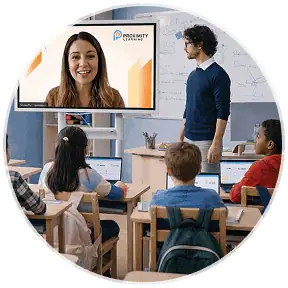
Proximity Learning strives to end the equity gap by filling these teacher vacancies with certified virtual teachers who livestream into the classrooms or student homes to teach high-quality lessons every day.
Read more about our goal to bring educational equity to 1 million students.