

Virtual school has proven to be an effective learning option for self-motivated students with unique needs. Remote learning offers students the flexibility to travel, focus on extracurricular activities or refine their fields of study. While many students thrive in brick-and-mortar classrooms, others succeed virtually.
No two students learn the same or have the same strengths. Offering a virtual option gives students the unique opportunity to learn in the best way for them. Developing key executive skills helps students start out on the right foot. By focusing on growing a few key skills, any student can learn from live virtual instruction.
How do you prepare students for virtual learning?
- Practice computer skills
Successful virtual students can easily log on to the computer, check email and engage on Zoom. They know how to create an account and recover a forgotten password. Take some time to practice these skills before classes begin, so the student is comfortable problem solving online. - Develop strong reading, writing, and typing skills
Good communication with classmates and the certified virtual teacher is enhanced with good reading and writing skills. Instructions are often posted in writing on Canvas. Clarification questions can easily be answered in the chatbox or over email. Peers can collaborate and help each other. Communication skills are the cornerstone of successful online learning for the classroom and future employment. - Encourage participation
Students who interact with their classmates and certified virtual teachers have great outcomes in online learning. Discussion boards are commonly used to facilitate analytical conversations. By participating openly, students will learn quickly and retain more information. Not to mention, this form of communication builds strong relationships within the class. - Set up a learning space
Designate a school area that is free from distraction. If you can, find a place that is not used for other activities. For instance, avoid using the kitchen table where you share your meals. In a quiet and secluded place, stock the desk with supplies like notebooks, pencils and markers, so everything is within reach. Entering a clearly designated area will signal the brain that it is learning time. - Encourage self-regulation and time management
Virtual students should regularly practice paying attention to their certified virtual teacher and turning in assignments on time. Distraction-free listening is a habit that develops over time. Encourage routines by providing a quiet environment and using positive reinforcement. Check-in with your student as assignment due dates near to see their progress. Help them break the project into parts and schedule working times to ensure deadlines are met. - Establish goals and expectations
Help your student understand their daily schedule to establish a comfortable routine. Eat a good breakfast and get dressed for the day before sitting down for school. Encourage a growth mindset, so your student is always striving to take away some learning each day. Set boundaries for before, during and after school time, so your student can focus on school during instruction and focus on playing and relaxing afterward.
With these skills, a virtual student will be prepared to learn in the virtual environment. From there, the teacher will do the rest.
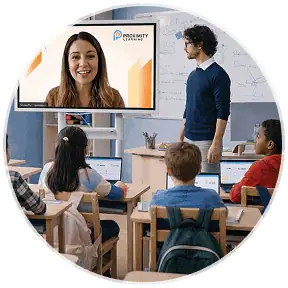
A quality virtual certified teacher will set the tone in the classroom by being interactive. They will be prepared to keep students engaged in their class and design activities that are conducive to online learning. Proximity Learning certified virtual teachers are creative in the pedagogical approaches. For example, a virtual art teacher created an online art show to display student artwork.
Engaged students are thriving students. Proximity Learning prides itself on virtual classroom interaction and relationship building. To find out more about our virtual schools, click here.
Read a parent’s perspective: Virginia Parent Opts For Virtual Learning As Student Excels