
The effectiveness of online classes has become one of the biggest questions in the wake of the COVID-19 pandemic closing the doors of schools across the U.S. As many administrators, teachers, parents, and students scrambled to adapt to the sudden change in learning environments from in-person to completely online at the end of the 2019-2020 school year, there are more questions than answers about what education will look like this fall. Even more so, will students get the education they need?
After a decade of perfecting the effectiveness of online instruction, new national data proves that classes taught by a teacher trained in virtual schooling by Proximity Learning Inc. (PLI), an ESS and online education service company, are more effective than those taught in-person in a traditional brick-and-mortar school.
Can online classes properly prepare students for college?
With a global pandemic, a recent study by Chicago State University found high school grade point average (GPA) is rapidly becoming the measurement colleges observe first before making further decisions on a student’s admission.
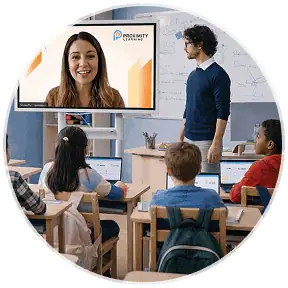
Researchers specifically studied classes taught all over the U.S. by PLI to investigate GPAs, efficacy, and COVID-19 readiness of students learning online in comparison to those in a traditional, physical classroom setting. PLI partners with schools to provide their classrooms with certified teachers through live video for a wide range of subjects.
Based solely on percentage and GPA, a student being taught in a live virtual environment by a PLI teacher would be a candidate for college admission, according to the study. Over six semesters, the average grade of a PLI student was 80.34% out of 100%, higher than the national average admissions requirements of 72.5% for the average state university.
Beyond their grades, PLI classes prepare students for college by exposing them early on to the technology and skills necessary for learning online. Plus, they have a teacher with experience and training in this virtual environment they meet with face-to-face online to guide them through this learning process.
How do students score online compared to in-person?
Students score higher than the national average when learning from a virtual teacher trained in live video instruction. The study found the average PLI student grade is about 6% higher than the U.S. core average of 74.4% and is right on track with the national middle and high school average of 80%, according to the study.
The population of PLI students was chosen randomly for the study and consists of children with a diverse array of backgrounds from across the U.S. PLI is driven to achieve education equity through virtual instruction, allowing students in rural and lower-income areas where teacher shortages are at a high to have access to high-quality learning opportunities. Because of that, they are competitive with other students across the country who learn from teachers physically in the classroom.
Are online classes as effective when students are learning from home?
Many people are concerned about students losing out on instruction they need during school closures due to COVID-19, therefore falling behind on their learning.
For over a decade, PLI has trained hundreds of teachers to work in a virtual classroom. New teachers are prepared well in advance of their first day of instruction by sitting in on the lessons of experienced virtual teachers, being assigned a mentor to help guide them and answer questions, and learning the platforms and tools necessary to provide a quality education online.
This preparation has paid off in over 600 teachers who now instruct students entirely online through live video conferencing, allowing them to not miss a beat once COVID-19 closed schools and forced students to finish their school year at home. The study found that PLI students did not suffer the same challenging barriers that traditional schools encountered because they and the teachers were already familiar with the technology and software.
Additionally, many PLI teachers wanted their classroom to be a safe space during a challenging time and made sure to put students first by adjusting the classroom to suit their needs, such as giving a couple of minutes for them to socialize with classmates they haven’t been able to see. Live video instruction is arguably more effective from home because students are provided with consistency and a sense of normalcy by having set class times during the week where they log on, see familiar faces, and get to learn something new.
In other classes that were ordered to review material only during school closures, PLI teachers gave students a class to look forward to with fun review games and science experiments. There are an increasing number of tools and resources available for teachers to take advantage of in their online classes that can be personalized towards what their students need, therefore encouraging students to interact and take control of their own learning.
As the U.S. continues to face uncertainties of what the future of education will look like, the data proves that online real-time education from a certified PLI instructor successfully prepares K-12 students for college and helps them be competitive with students across the country by providing them with high-quality learning experiences, no matter if they are in the classroom or at home.